Understanding Long-Term Market Performance
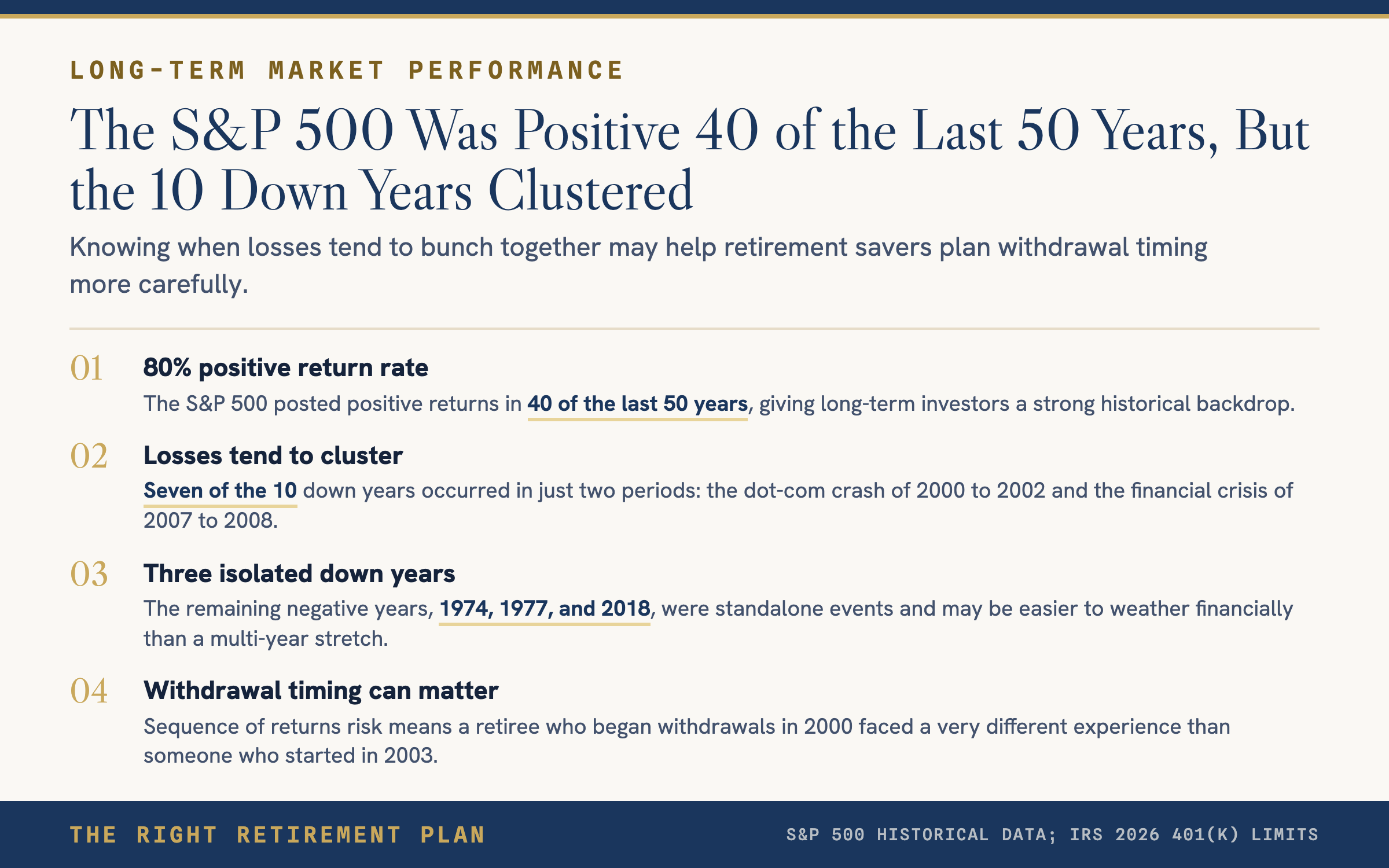
The S&P 500 has posted positive returns in 40 of the last 50 years, giving investors an impressive 80% success rate. This market performance data provides valuable context for retirement planning, especially for pre-retirees wondering what to expect from their portfolios.
However, the story behind these numbers reveals important patterns. The 10 negative years weren't randomly scattered across five decades, they clustered into distinct periods that reshaped investor expectations.
When Markets Struggle: The Clustering Effect
Seven of those 10 down years occurred during just two major periods: the dot-com crash of 2000-2002 and the financial crisis of 2007-2008. This clustering means retirement investors typically experience several consecutive good years followed by concentrated periods of losses.
The remaining three negative years (1974, 1977, and 2018) were isolated events, making them easier to weather psychologically and financially. Understanding this pattern helps explain why:
• Long-term investors often feel blindsided by market downturns
• Sequence of returns risk becomes critical near retirement
• Dollar-cost averaging works better during isolated down years than clustered declines
• Historical stock market returns show recovery periods typically follow major crashes
For Maryland retirees and others approaching retirement, this clustering effect means timing matters more than many realize. A retiree who started withdrawing funds in 2000 faced a very different experience than someone who began in 2003.
Planning Around Market Realities
These patterns highlight why retirement planning requires more than just average return assumptions. The 2026 contribution limits for 401(k)s allow workers 50 and older to save $31,000 annually ($24,500 base plus $7,500 catch-up), making the final decade before retirement crucial for building reserves.
Consider these strategies:
• Maintain 1-2 years of expenses in cash or stable investments
• Diversify beyond just stock market exposure
• Plan withdrawal strategies that account for potential clustering
• Review asset allocation as retirement approaches
If you want personalized guidance on how these market realities fit into your specific retirement timeline, consider taking our Retire Ready Score for a comprehensive assessment of your current plan.