The Real Cost of Confusing Activity With Progress
Most investors lose three to four percent a year to themselves, not the market. The cause is mistaking trading activity for smart management. Here is what the data says, and what we do about it.
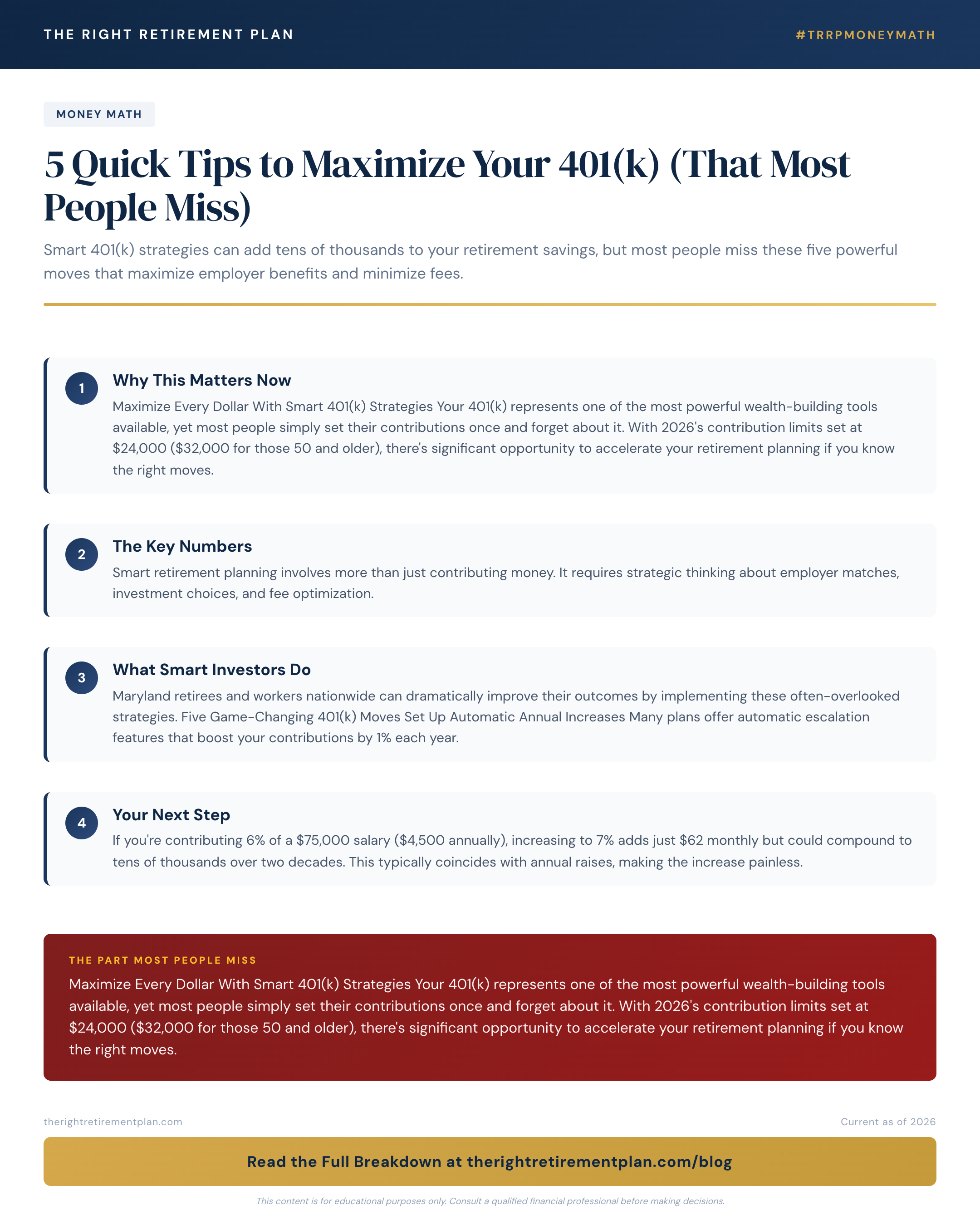
Smart 401(k) strategies can add tens of thousands to your retirement savings, but most people miss these five powerful moves that maximize employer benefits and minimize fees.
Your 401(k) represents one of the most powerful wealth-building tools available, yet most people simply set their contributions once and forget about it. With 2026's contribution limits set at $24,000 ($32,000 for those 50 and older), there's significant opportunity to accelerate your retirement planning if you know the right moves.
Smart retirement planning involves more than just contributing money. It requires strategic thinking about employer matches, investment choices, and fee optimization. Maryland retirees and workers nationwide can dramatically improve their outcomes by implementing these often-overlooked strategies.
Set Up Automatic Annual Increases
Many plans offer automatic escalation features that boost your contributions by 1% each year. If you're contributing 6% of a $75,000 salary ($4,500 annually), increasing to 7% adds just $62 monthly but could compound to tens of thousands over two decades. This typically coincides with annual raises, making the increase painless.
Capture Every Penny of Employer Match
Never leave free money on the table. A typical employer might match 50% of contributions up to 6% of salary. On that $75,000 income, contributing the full 6% earns you an extra $2,250 annually, an immediate 50% return that's virtually guaranteed.
Review Your Investment Mix Regularly
Default target-date funds might not align with your goals. These one-size-fits-all solutions may be too conservative for younger workers or too aggressive for pre-retirees. Consider your risk tolerance, timeline, and retirement income planning needs when selecting investments.
Minimize Investment Fees
High fees silently erode returns over time. The difference between 0.5% and 1.0% annual fees costs $1,000 yearly on a $200,000 balance. Look for low-cost index funds with expense ratios below 0.10% when available.
Explore In-Service Rollovers After 59½
If you're 59½ or older, you might roll part of your 401(k) into an IRA while still working. This provides access to broader investment options and potentially lower costs, while allowing continued contributions to both accounts.
Small 401(k) adjustments today can mean massive benefits later. Start by reviewing your contributions, maximizing employer matches, cutting fees, and building smarter investment allocations. These moves become even more critical as you approach retirement with less time to recover from mistakes.
If you want personalized guidance on optimizing your 401(k) within your complete retirement strategy, consider taking our Retire Ready Score assessment.
Have questions about your specific situation? Take the free Retire Ready Score →
More on money math from the TRRP editorial team.

Most investors lose three to four percent a year to themselves, not the market. The cause is mistaking trading activity for smart management. Here is what the data says, and what we do about it.

Behavioral mistakes cost retirees about 1.2 percent a year. Most of the damage hits in the first five years of retirement, and the fix is structural, not emotional.

The retiree who finishes well is rarely the one who picked the best fund. The pattern shows up in seven habits, none of which require predicting the market.
Our content gives you the knowledge. A qualified advisor can help you act on it.
Take the Free Assessment