How Inflation Quietly Steals Your Retirement (And How to Fight Back)

April 11, 2026· 5 min read

You don't have to see inflation to feel its effects. Over time, it silently eats away at your purchasing power — and if you don't plan for it, it can wreck even the best retirement strategy.

Here's why inflation matters more than ever in retirement, and what you can do to protect yourself.

---

Inflation's Slow but Powerful Impact

It's easy to underestimate inflation because the effects are slow. But even a 3% inflation rate cuts your money's value in half in just about 24 years.

That means:

  • $50,000 in living expenses today could cost $100,000 in retirement
  • A "safe" nest egg could run out far sooner than you expect
  • Your lifestyle could shrink year after year without you even realizing it
Consider this: with 2026's Social Security cost-of-living adjustment (COLA) at 2.5%, many retirees will see their benefits increase by roughly $50-75 per month. While helpful, this modest bump may not keep pace with actual spending increases, especially for healthcare and housing.

Planning for inflation isn't optional — it's critical if you want your money to last.

---

Why Retirees Feel Inflation Even More

When you're living on a fixed income, every price increase hurts a little more. For families planning retirement and pre-retirees in Florida, California, and other high-cost states, this challenge becomes even more pronounced.

Retirees are especially vulnerable because:

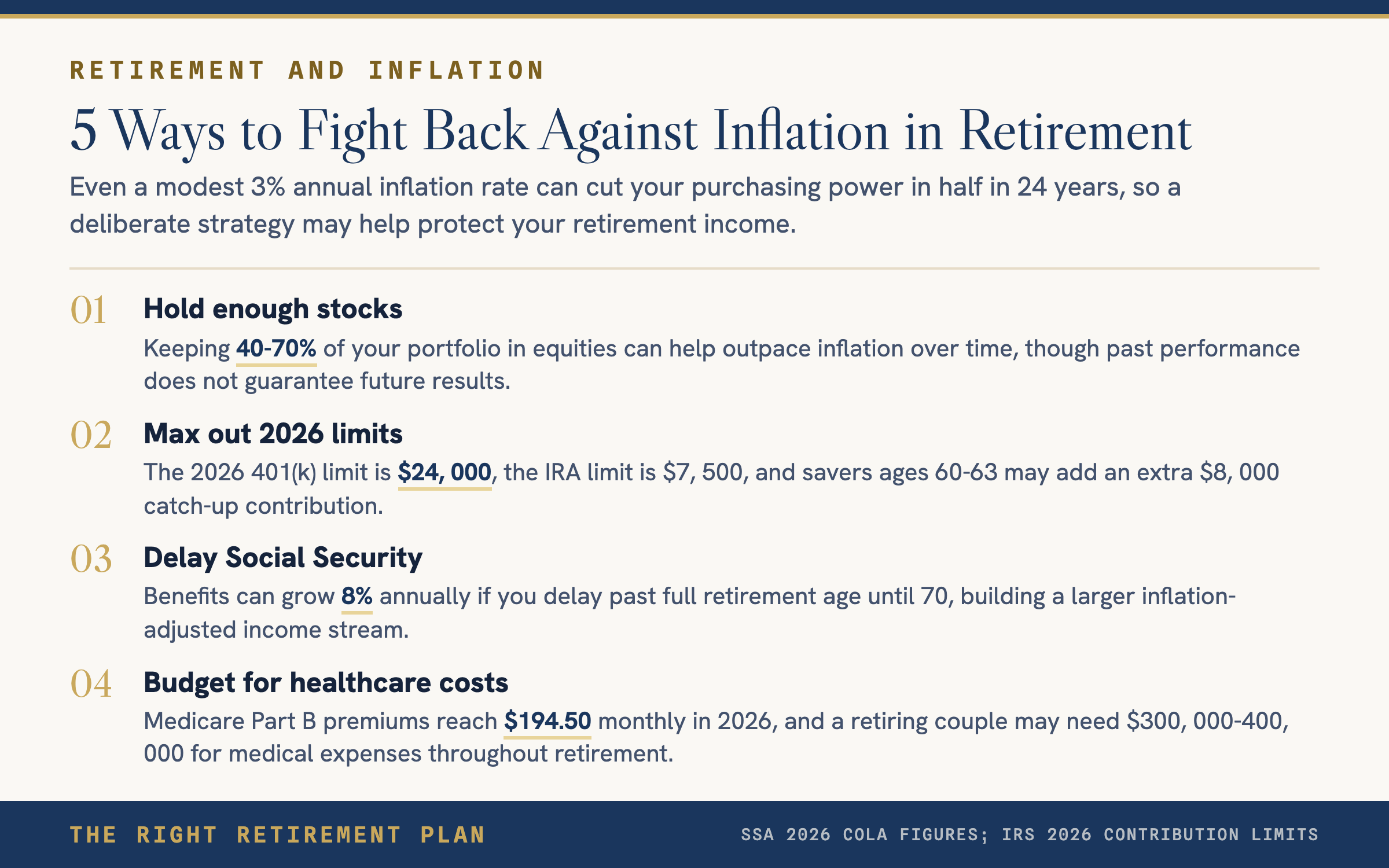
  • Medical expenses typically rise faster than general inflation (Medicare Part B premiums alone are $194.50/month in 2026)
  • Housing costs (maintenance, property taxes) often increase at 4-6% annually
  • Essentials like food, transportation, and insurance premiums tend to outpace general inflation over time
  • Fixed pension payments and bond interest don't adjust upward
Healthcare costs deserve special attention. A couple retiring today may need $300,000-400,000 just to cover medical expenses throughout retirement — and that's assuming moderate inflation in healthcare costs.

Without a built-in strategy to keep pace, retirees risk quietly losing their standard of living.

---

Smart Moves to Beat Inflation in Retirement

Keep a Growth Component in Your Portfolio:
Staying too conservative (all cash or bonds) can make it hard to outpace inflation. Many financial advisors suggest maintaining 40-70% stock allocation even in retirement, depending on your risk tolerance and timeline. Historical data shows stocks have outpaced inflation over long periods, though past performance doesn't guarantee future results.

Maximize Tax-Advantaged Savings Now:
The 2026 contribution limits offer significant opportunities: $24,000 for 401(k) plans, $7,500 for IRAs, and enhanced catch-up contributions of $8,000 for those aged 60-63. These higher limits help you build a larger foundation that can better withstand inflation's erosion.

Use Dynamic Withdrawal Strategies:
Rather than blindly withdrawing the same amount every year, adjust withdrawals based on market returns and inflation conditions. The traditional 4% rule may need modification — some experts suggest starting at 3.5% with annual adjustments based on actual inflation data.

Delay Social Security (If Possible):
Benefits grow by about 8% per year if you delay past full retirement age until age 70. Plus, Social Security benefits adjust annually for inflation, making them one of your best inflation hedges. This 8% annual increase is guaranteed and compounds, often outpacing what you might earn in conservative investments.

Maintain a Flexible Spending Plan:
Build in the ability to reduce discretionary spending in tough inflation years. Consider creating spending buckets: non-negotiable expenses, lifestyle expenses, and discretionary luxuries that can be adjusted as needed.

---

While general inflation might average 2-3% annually, your personal inflation rate could be much higher or lower depending on your spending patterns. Retirees who travel frequently felt transportation inflation acutely in recent years, while those with paid-off homes experienced less housing pressure.

The key insight? Build flexibility into your retirement income strategy rather than trying to predict exactly what inflation will do. This might mean keeping some investments that can benefit from inflation (like REITs or Treasury Inflation-Protected Securities), maintaining skills that could generate part-time income, or choosing where to retire based partly on cost-of-living trends.

Consider also that the current estate tax exemption of $13.99 million per person in 2026 is scheduled to drop significantly in 2026 without legislative action. For wealthy families, inflation combined with changing tax law could create a double impact on wealth transfer strategies.

---

Bottom Line

Inflation is the slow thief most retirees forget about — until it's too late.

With smart planning, you can fight back and help ensure your money keeps working for you, not against you. The combination of maximizing 2026's higher contribution limits, building flexible withdrawal strategies, and maintaining appropriate growth investments can help protect your purchasing power over decades of retirement.

Remember: there are no guarantees in investing or retirement planning. Market conditions, inflation rates, and personal circumstances will vary. The strategies that work best for you depend on your specific situation, timeline, and risk tolerance.

Want to learn how to inflation-proof your retirement strategy? The Right Retirement Plan starts with education. Get matched with a Select Advisor →

ShareX / TwitterFacebook

Have questions about your specific situation? Take the free Retire Ready Score →

The Compound Effect

Weekly retirement insights in your inbox.

Plain-English breakdowns of the week’s most important retirement news, tax changes, and strategies. Free. Unsubscribe anytime.

Get THE RIGHT retirement plan for you.

Take the 2-minute Retire Ready Score assessment — free, no email required to start.

Take the Free Assessment →