The Real Cost of Confusing Activity With Progress
Most investors lose three to four percent a year to themselves, not the market. The cause is mistaking trading activity for smart management. Here is what the data says, and what we do about it.
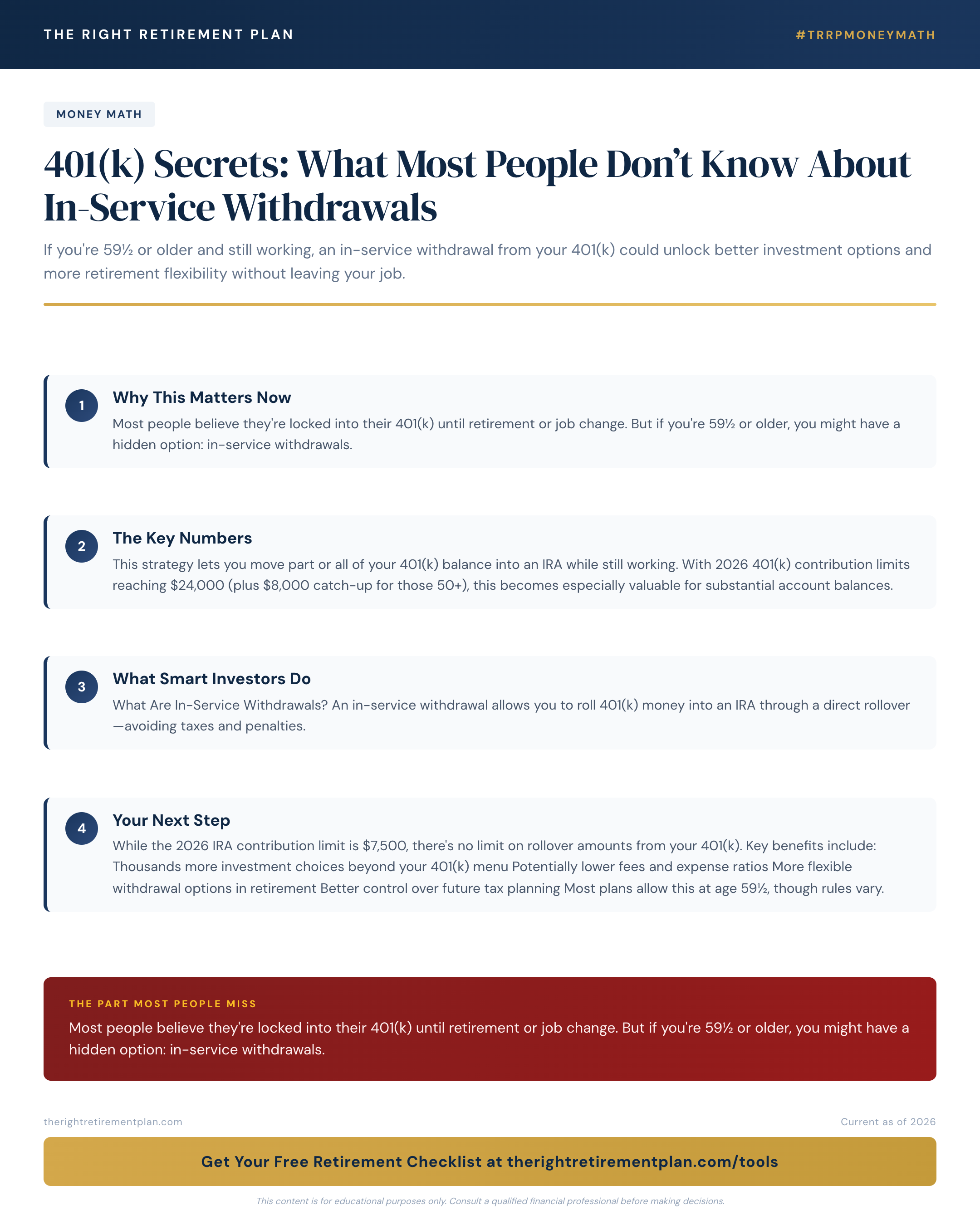
If you're 59½ or older and still working, an in-service withdrawal from your 401(k) could unlock better investment options and more retirement flexibility without leaving your job. Here's what Maryland pre-retirees need to know about this powerful but overlooked strategy.
Most people believe they're locked into their 401(k) until retirement or job change. But if you're 59½ or older, you might have a hidden option: in-service withdrawals.
This strategy lets you move part or all of your 401(k) balance into an IRA while still working. With 2026 401(k) contribution limits reaching $24,000 (plus $8,000 catch-up for those 50+), this becomes especially valuable for substantial account balances.
An in-service withdrawal allows you to roll 401(k) money into an IRA through a direct rollover, avoiding taxes and penalties. While the 2026 IRA contribution limit is $7,500, there's no limit on rollover amounts from your 401(k).
Key benefits include:
Investment Freedom: Most 401(k) plans offer just 10-25 investment options. An IRA opens access to individual stocks, ETFs, REITs, and international funds typically unavailable in employer plans.
Cost Control: Some 401(k)s charge annual fees of $50-$200 plus high expense ratios exceeding 1%. With an IRA, you can choose low-cost index funds with expense ratios under 0.1%.
Retirement Flexibility: IRAs offer more distribution options for retirement income planning. This becomes crucial when coordinating with Social Security benefits, which received a 2.5% cost-of-living adjustment in 2026.
Estate Planning: For Maryland retirees whose estates might approach the $13.99 million federal exemption threshold in 2026, IRAs typically provide better beneficiary options and stretch provisions than employer plans.
In-service withdrawals aren't always the right move. Consider keeping your 401(k) if:
Before proceeding, check your 401(k) plan rules, compare fee structures, and consider how this fits your retirement timeline. Calculate the true cost differences and understand all tax implications.
Remember: Every situation is unique, and the best choice depends on your specific plan features, investment options, and retirement goals.
If you want personalized guidance on whether an in-service withdrawal makes sense for your situation, consider taking our Retire Ready Score for insights tailored to your circumstances.
Have questions about your specific situation? Take the free Retire Ready Score →
More on money math from the TRRP editorial team.

Most investors lose three to four percent a year to themselves, not the market. The cause is mistaking trading activity for smart management. Here is what the data says, and what we do about it.

Behavioral mistakes cost retirees about 1.2 percent a year. Most of the damage hits in the first five years of retirement, and the fix is structural, not emotional.

The retiree who finishes well is rarely the one who picked the best fund. The pattern shows up in seven habits, none of which require predicting the market.
Our content gives you the knowledge. A qualified advisor can help you act on it.
Take the Free Assessment