The Real Cost of Confusing Activity With Progress
Most investors lose three to four percent a year to themselves, not the market. The cause is mistaking trading activity for smart management. Here is what the data says, and what we do about it.
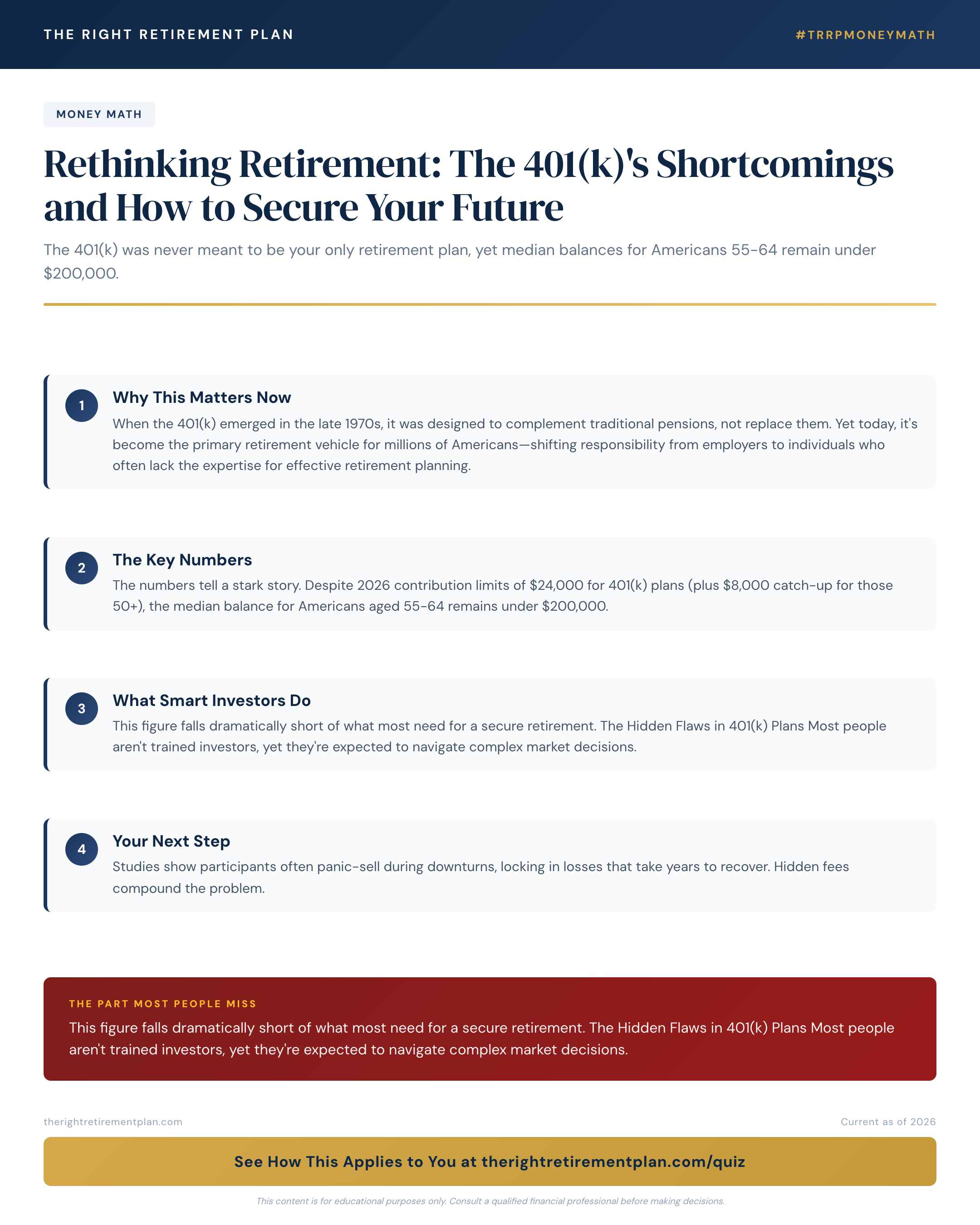
The 401(k) was never meant to be your only retirement plan, yet median balances for Americans 55-64 remain under $200,000. Learn why relying solely on employer plans falls short and discover comprehensive strategies to secure your financial future.
When the 401(k) emerged in the late 1970s, it was designed to complement traditional pensions, not replace them. Yet today, it's become the primary retirement vehicle for millions of Americans, shifting responsibility from employers to individuals who often lack the expertise for effective retirement planning.
The numbers tell a stark story. Despite 2026 contribution limits of $24,000 for 401(k) plans (plus $8,000 catch-up for those 50+), the median balance for Americans aged 55-64 remains under $200,000. This figure falls dramatically short of what most need for a secure retirement.
Most people aren't trained investors, yet they're expected to navigate complex market decisions. Studies show participants often panic-sell during downturns, locking in losses that take years to recover.
Hidden fees compound the problem. A seemingly modest 1% annual fee can reduce a $500,000 portfolio by more than $100,000 over 20 years. Many participants remain unaware of these costs buried in complex disclosure documents.
Inconsistent participation creates another hurdle. Unlike guaranteed pensions, 401(k) plans require individuals to opt-in and contribute regularly. Low income, student debt, or financial illiteracy can derail consistent savings, especially for workers without employer plans who face IRA limits of just $7,500 annually (plus $1,000 catch-up).
Traditional 401(k) contributions provide immediate tax deductions, but retirement withdrawal strategy becomes crucial when those funds are taxed as ordinary income later. With current tax rates historically low and mounting national debt, many pre-retirees, including those working with advisors in the Annapolis area, face potentially higher tax rates in retirement than during their working years.
New 2026 rules add complexity: workers aged 60-63 earning over $145,000 must make additional catch-up contributions with after-tax dollars, requiring careful tax-efficient retirement coordination.
The landscape continues shifting. Social Security's 2.5% cost-of-living adjustment provides modest relief, while Medicare Part B premiums rose to $194.50 monthly. The federal estate tax exemption sits at $13.99 million per individual, but this threshold sunsets in 2026, potentially affecting more families than expected.
Comprehensive retirement income planning extends far beyond employer plans. Smart strategies include:
• Maximizing both 401(k) and IRA contributions
• Evaluating Roth conversion strategy opportunities
• Coordinating spousal retirement accounts
• Optimizing Social Security benefits claiming timing
• Health Savings Account utilization for triple tax advantages
Don't let 401(k) limitations jeopardize your future. If you'd like personalized guidance on building a comprehensive retirement strategy, consider taking our Retire Ready Score to identify gaps and opportunities in your current plan.
Have questions about your specific situation? Take the free Retire Ready Score →
More on money math from the TRRP editorial team.

Most investors lose three to four percent a year to themselves, not the market. The cause is mistaking trading activity for smart management. Here is what the data says, and what we do about it.

Behavioral mistakes cost retirees about 1.2 percent a year. Most of the damage hits in the first five years of retirement, and the fix is structural, not emotional.

The retiree who finishes well is rarely the one who picked the best fund. The pattern shows up in seven habits, none of which require predicting the market.
Our content gives you the knowledge. A qualified advisor can help you act on it.
Take the Free Assessment