What the AI Wave Means for Your Retirement Portfolio
AI is moving in 24 months what the internet took a decade to move. For retirees, the right question is not whether AI is real. It is what it does to your portfolio.
Memorial Day kicks off the season most investors quietly check out. Here is what we are watching, what we are doing for clients, and the boring but important work that gets done while everyone else is at the beach.
Memorial Day weekend is the unofficial start of summer, and almost on cue, a lot of investors quietly check out of their plan until Labor Day. The calendar empties. The headlines feel slower. The portfolio is up, the bills are paid, the next big planning conversation can wait until the leaves turn.
We get it. We also see what happens to the people who let the whole summer drift by.
The truth is that the second half of the year is where most of the real planning work gets done. Tax windows close. Roth conversion opportunities show up only when the math lines up. Rebalancing matters most after a strong run. By September, the people who used the summer well are already finished with their year. The people who did not are scrambling.
This is also a particularly loud setup for that to happen in.
The AI hyperscalers, the chip designers, the data center builders, and the companies selling power, cooling, and networking into all of it have continued to do the heavy lifting in the index. That is not an opinion. It is what the earnings reports keep showing.
We are still constructive on the part of the market that is actually shipping the steel that AI runs on. The demand is concrete. The capex commitments are public. The physical layer of this buildout is going to keep needing more of itself for a long time.
But leadership this narrow is also why we are paying close attention to concentration risk inside the index right now. The largest names carry a meaningful share of the S&P 500 by weight. If you own a target-date fund, an S&P index fund, and a total stock market fund, there is a very good chance you own the same handful of companies three times.
That is not a reason to abandon index investing. It is a reason to understand what you actually own and to make sure your bond, international, and value exposures are not getting quietly drowned out by the engine pulling everything.
Mid-year is when we look at that under the hood for every household we work with.
Hate to get political, but it is an election year. We are going to hear a lot of confident claims about what the market will do depending on who wins. Most of those claims will not survive contact with the actual data going back a hundred years.
Markets have gone up under Democrats. Markets have gone up under Republicans. Markets have also fallen under both. The biggest moves of the last few decades had more to do with monetary policy, profit margins, and tax law than with which party held the White House.
What we do pay attention to in an election year is sequencing risk. Volatility tends to be higher in the months leading up to a presidential election than in the months after. For someone in their early sixties who is two years from retirement, that matters more than the headline. A 15% drawdown six months before you stop earning a paycheck looks very different than the same drawdown when you are still ten years out.
This is exactly the conversation that gets put off all summer if nobody schedules it. It should not be.
If we sat down on June 1 and built one list for every household we work with, here is roughly what would be on it.
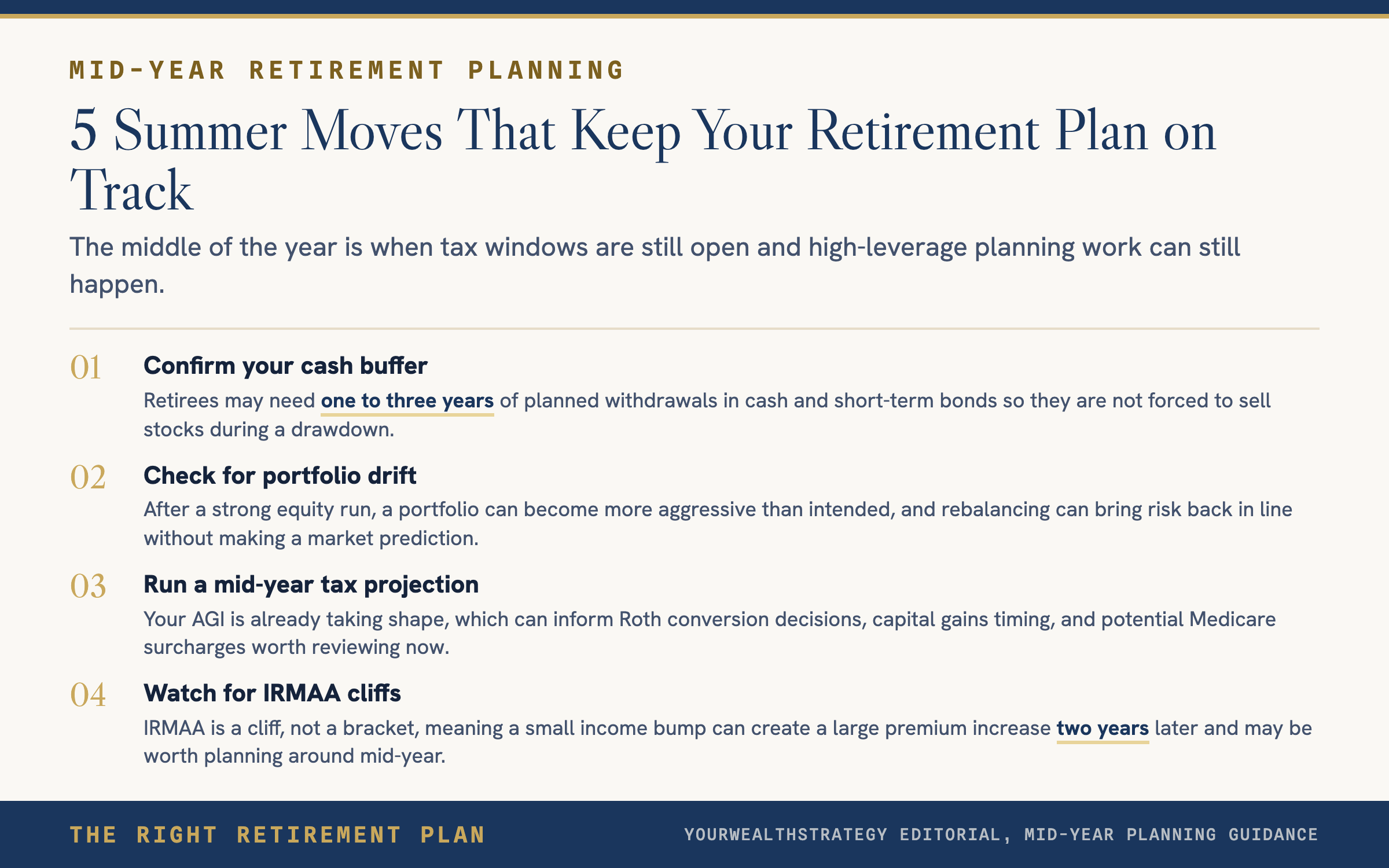
Review the asset allocation against the plan, not against the headlines. If tech has run, the allocation is probably out of bounds. Rebalancing is not a market call. It is risk management.
Look at the tax projection for the year. Bonus season is mostly past, AGI is starting to take shape, and there is still room to be intentional about Roth conversions, deferred compensation elections, charitable timing, and capital gain budgeting before the calendar locks them in.
Check the cash buffer. If you are in retirement or close to it, the cash and short bond bucket should cover one to three years of withdrawals depending on your plan. If a strong run in stocks has it sitting light, that is a quiet problem you do not want to discover during a drawdown.
Run the beneficiary review. Old 401(k) plans from a previous employer, an old IRA at a different custodian, a life insurance policy from when the kids were in elementary school. People rarely get hurt by the beneficiary they last updated. They get hurt by the one they forgot to update twenty years ago.
Update the estate documents if anything has changed. New marriage, new business, new state of residence, new child or grandchild, new dollar value. The document only works if the facts inside it still match your life.
None of this is exciting. All of it is what separates the people who retire well from the people who almost did.
The end-of-year scramble in November and December gets too crowded for good planning. Markets are usually doing something dramatic. Tax windows are tighter. Custodians are slower. Holidays eat the calendar.
The summer is when we have actual time to think. That is the entire point.
If you want to know whether your plan is still doing what you hired it to do, summer is when to find out. Volatility, tech leadership, election noise, and a calendar that is going to move faster than you think are all stacked up between Memorial Day and the end of the year. Spend two hours in the summer, save yourself a quarter of stress in the fall.
If you are a Compound Advisory client and we have not yet scheduled your mid-year review, reach out. If you are not yet a client and you are reading this wondering whether your plan accounts for any of the above, that is the right reason to start the conversation.
We are happy to walk through it with you.
Compound Advisory LLC is a registered investment adviser. This material is for informational and educational purposes only and does not constitute personalized investment, legal, or tax advice. Market commentary reflects the views of Compound Advisory as of the date written and is subject to change without notice. Past performance is not indicative of future results. All investments involve risk, including the possible loss of principal. Please consult with your advisor regarding your specific situation before making any decisions.
Have questions about your specific situation? Take the free Retire Ready Score →
More on investing from the TRRP editorial team.

AI is moving in 24 months what the internet took a decade to move. For retirees, the right question is not whether AI is real. It is what it does to your portfolio.

Tax loss harvesting is one of the most misunderstood tools in retirement investing. Done well it saves you thousands. Done poorly it locks in losses you did not need to take. Here is how to tell the difference.

The old 60/40 portfolio assumes bonds will cushion your retirement income. In a world of volatile yields, war risk, and inflation shocks, that assumption is breaking. Dividend stocks are worth a serious second look.
Our content gives you the knowledge. A qualified advisor can help you act on it.
Take the Free Assessment