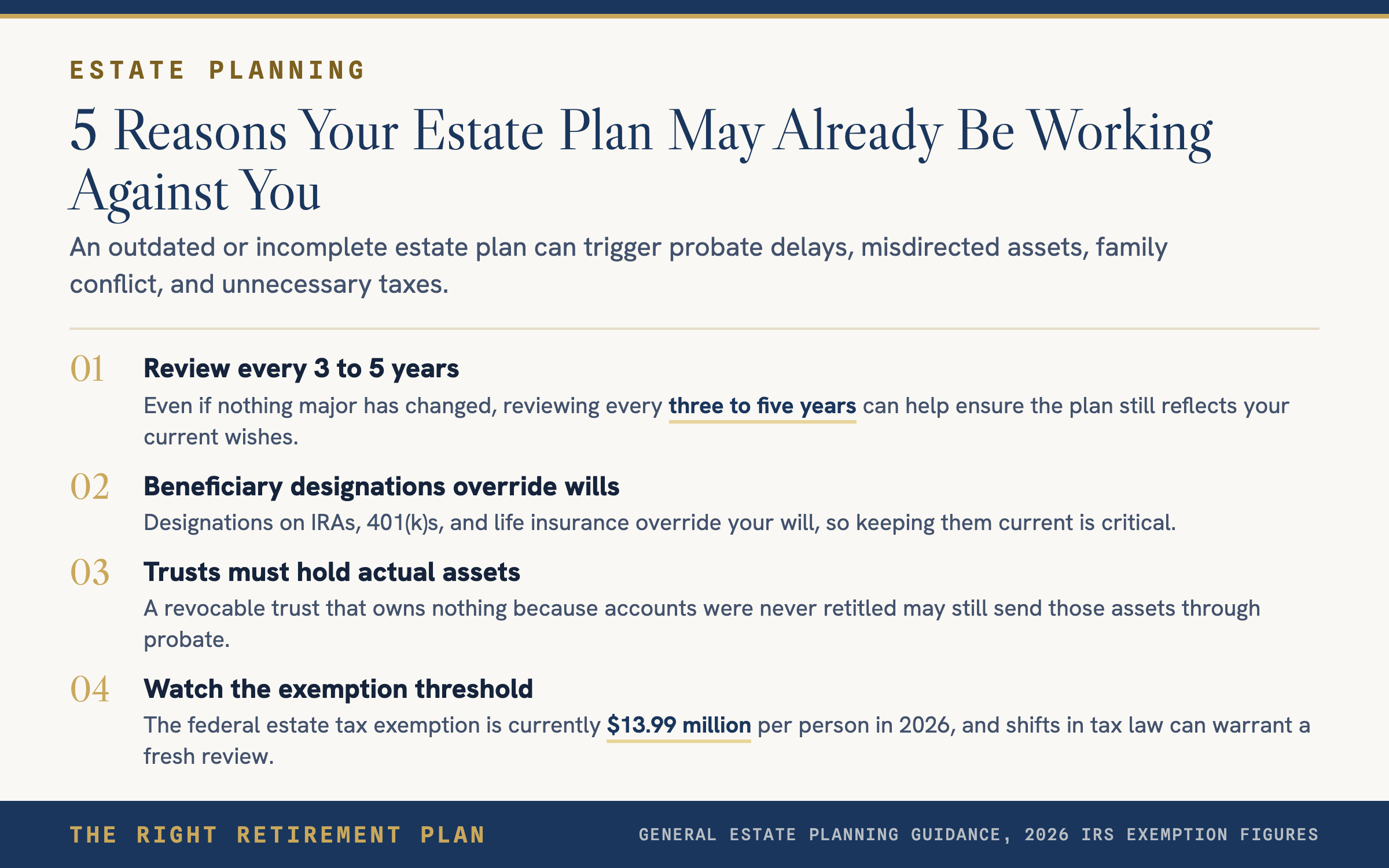
Estate planning is one of those tasks everyone agrees is important, but few people actually keep current. For many households it becomes a "set it and forget it" document, buried in a filing cabinet until something goes wrong.
Here is the reality. Most people either do not have an estate plan, or they are relying on one that has not been touched in years. Even successful business owners, retirees, and high net worth families fall into this trap.
What Happens When a Plan Goes Stale
Consider a real world example. Rick was a real estate investor who exited in his early 60s with a solid net worth and a paid-off home. He was sharp, proactive, and financially independent. But like many people, he assumed his old estate plan would do the job.
It did not. Rick passed away unexpectedly, and when the family opened his documents they found problems everywhere.
- His healthcare proxy was his ex-wife.
- His trust beneficiaries were still listed as minors.
- His will had not been updated in 15 years.
- None of his recent real estate was titled in the trust.
When to Review Your Estate Plan
You do not need to update your plan every year, but you should review it regularly and revisit it after major life or financial changes. Common triggers include:
- Selling a business or major property
- Moving to a different state, since estate laws vary significantly
- Marriage, divorce, or the death of a spouse
- Birth of children or grandchildren
- A beneficiary becoming disabled or passing away
- Major tax law changes, such as shifts to the federal estate tax exemption (currently $13.99 million per person in 2026)
What a Complete Estate Plan Includes
A strong estate plan is not just a will. It is a coordinated set of documents covering your assets, your healthcare decisions, and your legacy.
- Will. Directs how assets are distributed and names guardians for minor children.
- Revocable Living Trust. Avoids probate and allows smoother, more private asset transfers. Especially useful for real estate, blended families, or complex wealth.
- Durable Power of Attorney. Authorizes someone you trust to handle financial decisions if you become incapacitated.
- Healthcare Directive. Outlines your medical wishes and appoints a proxy to make healthcare decisions on your behalf.
- Beneficiary Designation Review. Beneficiary designations on IRAs, 401(k)s, and life insurance override your will. They must be reviewed and updated regularly.
Leaving behind money is easy. Leaving behind clarity is the real gift. Whether your net worth is $500,000 or $5 million, the best time to update your estate plan is before life surprises you.
The Right Retirement Plan starts with education. If you want to see where your plan stands, take the free Retire Ready Score.