When most people hear the word "trust," they think of billionaires handing fortunes to future generations. But trusts aren't just for the ultra-wealthy anymore. For many families approaching or entering retirement, setting up a trust can be a smart estate planning strategy to protect assets, simplify inheritance, and create lasting financial security.
The real question is: when should you set one up?
What a Trust Actually Does for Retirees
At its core, a trust is a legal arrangement that lets you control how your assets are managed and distributed, both while you're alive and after you pass away. This becomes especially valuable as you transition from wealth accumulation to wealth preservation.
Trusts can:
- Avoid probate (saving time, costs, and privacy headaches)
- Protect assets for children or grandchildren
- Shield inheritances from creditors or lawsuits
- Create tax advantages in certain cases
- Allow continued asset management if you become incapacitated
Signs It's Time to Consider a Trust
You might want to seriously consider estate planning with a trust if:
- You have minor children or beneficiaries who aren't ready to manage money
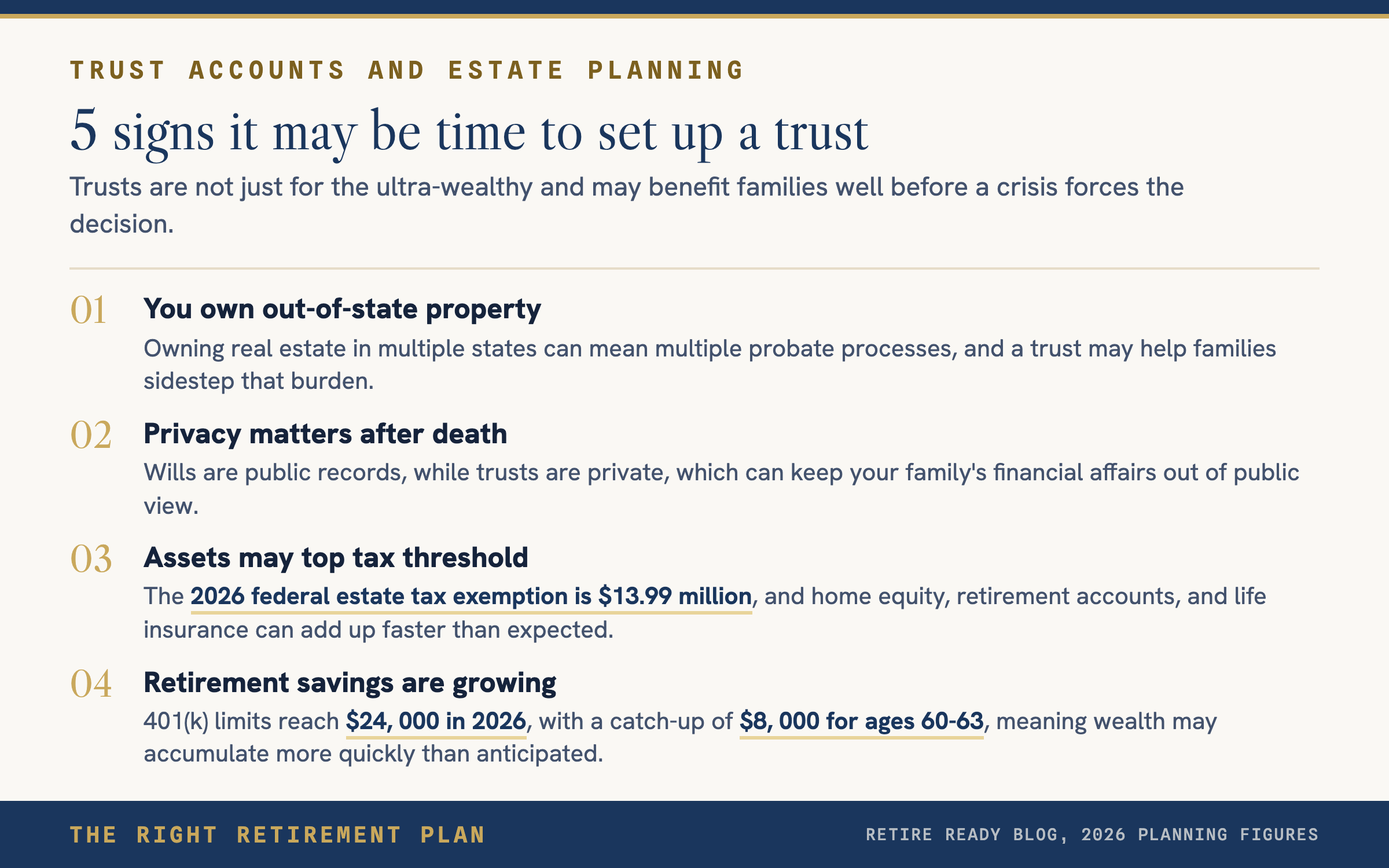
- You own real estate in multiple states (avoiding multiple probate processes)
- You want to keep your affairs private after death (wills are public, trusts are private)
- You want to control distributions over time rather than leaving lump sums
- You have a blended family with specific inheritance wishes
- Your combined assets could approach the 2026 federal estate tax exemption of $13.99 million
Timing Considerations for 2026
Current retirement planning factors make trusts particularly relevant:
- 401(k) contribution limits reach $24,000 in 2026, with catch-up contributions of $8,000 for ages 60-63
- IRA contribution limits at $7,500 annually help build substantial tax-deferred wealth
- Social Security benefits received a 2.5% COLA adjustment, increasing retirement income
- Rising asset values may push more families toward estate tax thresholds
Common Trust Types
Revocable Living Trust: The most popular option lets you maintain full control during your lifetime while avoiding probate. Perfect for estates worth hundreds of thousands or millions.
Irrevocable Trust: Offers stronger asset protection and tax benefits, but changes are generally not allowed once created. May help reduce estate tax exposure for larger estates.
Testamentary Trust: Created through your will and takes effect after death. Often used when current values don't warrant immediate trust creation but future growth might.
The right time for estate planning often comes earlier than most people expect, especially as retirement approaches and asset values grow. If you're wondering whether now is the right time to explore trust options in your retirement planning, consider taking our Retire Ready Score for personalized guidance.