Why Beneficiary Designations Trump Your Will
When it comes to retirement planning, your beneficiary forms hold more power than your will. For retirement accounts like 401(k)s and IRAs, the person listed on your beneficiary designation receives the money, regardless of what your will says.
This creates a dangerous blind spot for many pre-retirees. With 2026 401(k) contribution limits reaching $24,000 ($32,000 with catch-up contributions, or $35,000 for those 60-63), these accounts often represent hundreds of thousands in accumulated wealth. A single outdated form could redirect your life's savings to an ex-spouse instead of your current family.
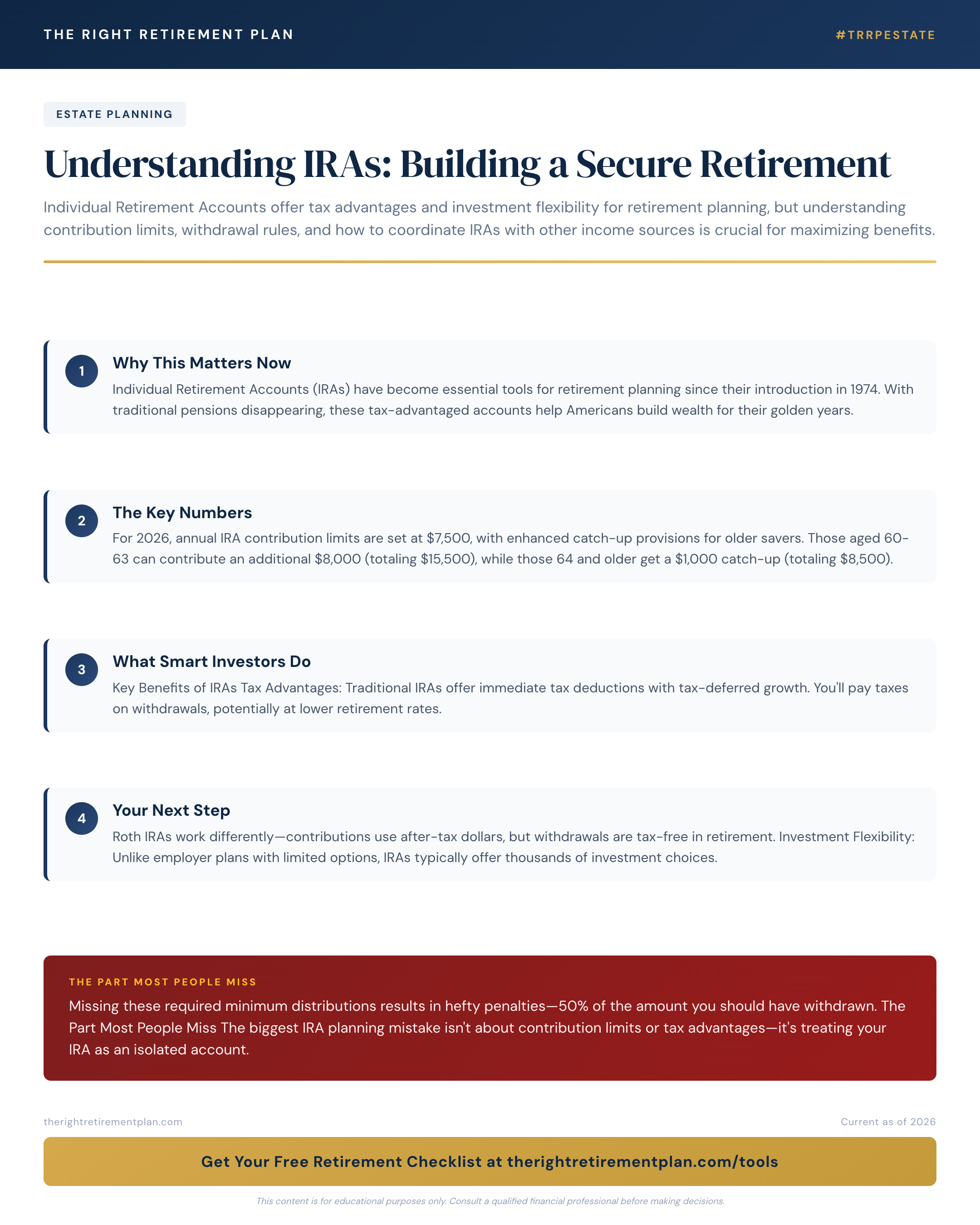
The same applies to IRAs, where 2026 contribution limits allow $7,500 ($15,500 with catch-up contributions). For Maryland retirees and others in the Mid-Atlantic region, these tax-deferred accounts frequently become their largest assets after their homes.
Common Mistakes That Derail Estate Planning
The most costly errors happen during major life transitions:
- Marriage or divorce without updating forms
- Naming deceased beneficiaries who can no longer inherit
- Listing minor children directly instead of through a trust
- Forgetting contingent beneficiaries as backup options
- Ignoring tax implications for inherited retirement accounts
Consider the financial impact: With Social Security's 2026 COLA adjustment of 2.5% and Medicare Part B premiums at $194.50 monthly, surviving spouses already face rising costs. The last thing they need is a prolonged legal battle over misdirected insurance proceeds.
Tax-efficient retirement planning can also unravel quickly. Inherited IRAs have specific distribution rules that preserve tax-deferred growth when handled correctly. But if assets land with unintended beneficiaries, your carefully crafted tax strategies become worthless.
Life insurance presents similar risks. Policies worth hundreds of thousands can create devastating financial gaps if beneficiaries haven't been updated after family changes.
When and What to Review
Review your beneficiary designations annually and after any major life event. Check these accounts:
- 401(k)s and traditional/Roth IRAs
- Life insurance policies
- Brokerage and bank accounts
- Health Savings Accounts (HSAs)
- Annuities and employee benefits
Most updates take less than 10 minutes through online portals, but the protection they provide is invaluable. Financial advisors in the Annapolis area often see families who could have avoided months of legal complications with simple form updates.
Don't overlook accounts with payable-on-death (POD) designations either. These bypass probate but only when beneficiary information stays current.
Take action today. Review your forms, update outdated information, and ensure your retirement planning includes this often-overlooked but crucial detail. If you want personalized guidance on coordinating your beneficiary designations with your overall retirement strategy, consider taking our Retire Ready Score for tailored recommendations.