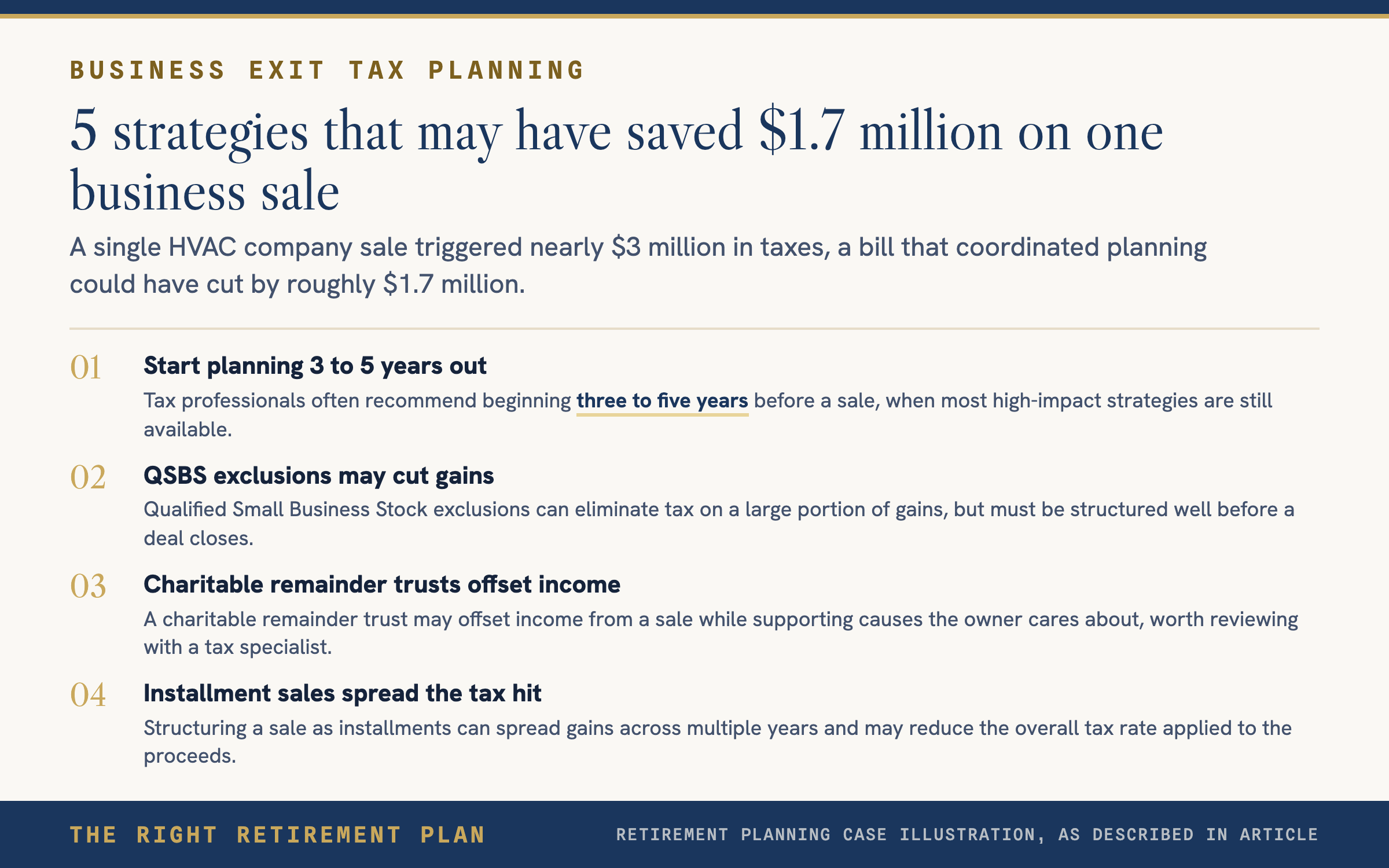
A business owner sold his HVAC company and walked away with a massive tax bill. Nearly $3 million went straight to federal and state taxes. The painful part is that with proper planning, roughly $1.7 million of that could have been saved.
He was not being careless. He had professional help. But the advisor he was working with was not equipped for the complexity of a business exit. That gap between general financial advice and specialized exit planning made all the difference.
Selling a Business Is a Tax Event First
Most owners underestimate how quickly taxes eat into a sale. Between federal capital gains, the Net Investment Income Tax (NIIT), and state income taxes, the bill can climb fast.
Once the deal closes, there is no way to unwind the tax consequences. You either planned properly in advance or you did not. That is why many tax professionals recommend starting the conversation three to five years before a sale. That timeline opens the door to strategies most people never hear about until it is too late.
Strategies That Could Have Saved $1.7 Million
With a coordinated team and a few years of runway, the owner could have explored several approaches:
- Qualified Small Business Stock (QSBS) exclusions, which can eliminate tax on a large portion of gains
- A charitable remainder trust to offset income while supporting causes he cared about
- Installment sale structuring to spread gains across multiple years and reduce the overall tax rate
- Roth conversions in the years leading up to the sale, building a pool of tax-free retirement income
- Trust and gifting strategies to pass wealth to the next generation efficiently
One Sale, One Shot
You typically only sell your business once. There are no do-overs on the tax outcome. Whether you are three years out or just starting to consider an exit, building a coordinated plan now is the single highest-value move you can make. The difference between reactive and proactive planning can be measured in the hundreds of thousands, or in this case, $1.7 million.
The Right Retirement Plan starts with education. If you want to see where your plan stands, take the free Retire Ready Score.