Insurance is not exciting. It does not come up at dinner parties, and most people would rather talk about almost anything else. But here is the truth: the more wealth you build, the more exposed you likely are. And many retirees, even successful ones, have not reviewed their coverage in years.
Consider a common scenario. A retired business owner sells a practice for several million dollars, has real estate and a solid estate plan, but never updates her insurance. A simple accident on her property leads to a lawsuit that exceeds her homeowners and umbrella limits combined. The shortfall comes straight out of her pocket.
Four Insurance Gaps Retirees Overlook
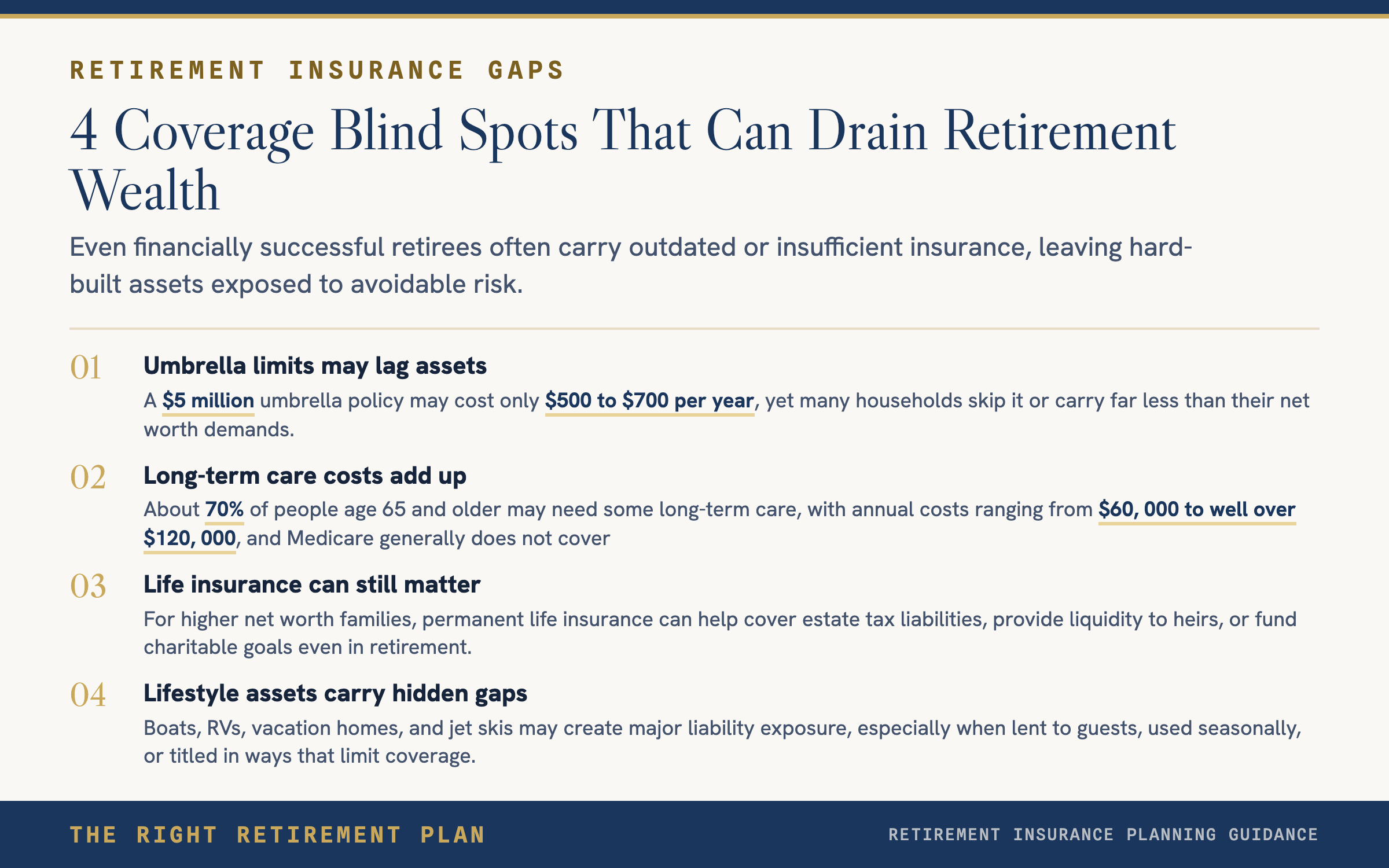
Umbrella Insurance. If you have significant assets, an umbrella policy is one of the simplest protections available. It provides extra liability coverage on top of your home, auto, and rental property policies. A $5 million umbrella policy might cost $500 to $700 per year. Yet most households either skip it entirely or carry far less than their net worth demands. Reviewing this coverage annually is wise, especially after major life or financial changes.
Long-Term Care Insurance. About 70% of people age 65 and older will need some form of long-term care. Annual costs can range from $60,000 to well over $120,000, and Medicare generally does not cover custodial or extended care. Modern long-term care policies are more flexible than ever. Many include return of premium or hybrid benefits so the money is not lost if care is never needed. Evaluating options based on cash flow, age, health, and family dynamics is far more productive than relying on hope.
Life Insurance. If you are retired or no longer have young dependents, you might assume life insurance is irrelevant. For higher net worth families, though, it can still play a critical role in covering estate tax liabilities, providing immediate liquidity to heirs, equalizing inheritances, or funding charitable goals. Permanent life insurance can also serve as a tax-efficient asset inside a broader plan. It is not for everyone, but dismissing it outright may be a mistake.
Coverage for Lifestyle Assets. Boats, motorcycles, vacation homes, RVs, and jet skis can create major risk exposure. This is especially true when they are lent to guests, used seasonally, or stored in different states. You do not want to discover after an accident that your coverage does not apply because of how the asset is titled or used.
When to Act
The best time to review your coverage is before you need it. If you have sold a business, inherited wealth, retired with significant assets, or simply have not looked at your policies in a few years, now is the time. Building wealth is one achievement. Protecting it is another.
The Right Retirement Plan starts with education. If you want to see where your plan stands, take the free Retire Ready Score.