Ever feel like your money is scattered across a dozen apps, old debit cards, and dusty logins from banks you barely remember? You are not alone. Many retirees and pre-retirees spend years building wealth on the fly, reacting as life happens. Then one day they realize their cash is everywhere with no clear retirement cash flow plan behind it.
Without a system, your money controls you. With a system, you are in control.
The Hidden Cost of Scattered Money
When your money is spread across multiple checking accounts, savings apps, and investment platforms, two things happen. You lose visibility, and you lose intentionality.
You stop knowing what is where and why. Short-term cash gets mixed with long-term investments. Savings becomes a vague catch-all. Before long, decisions are driven by anxiety or convenience rather than strategy.
That is not just inefficient. It is risky. When a large expense hits or the market dips, you end up asking, "Where should I pull from?" and "Will this wreck my long-term plan?" Those questions should already be answered before the moment arrives.
The 4-Bucket Cash System
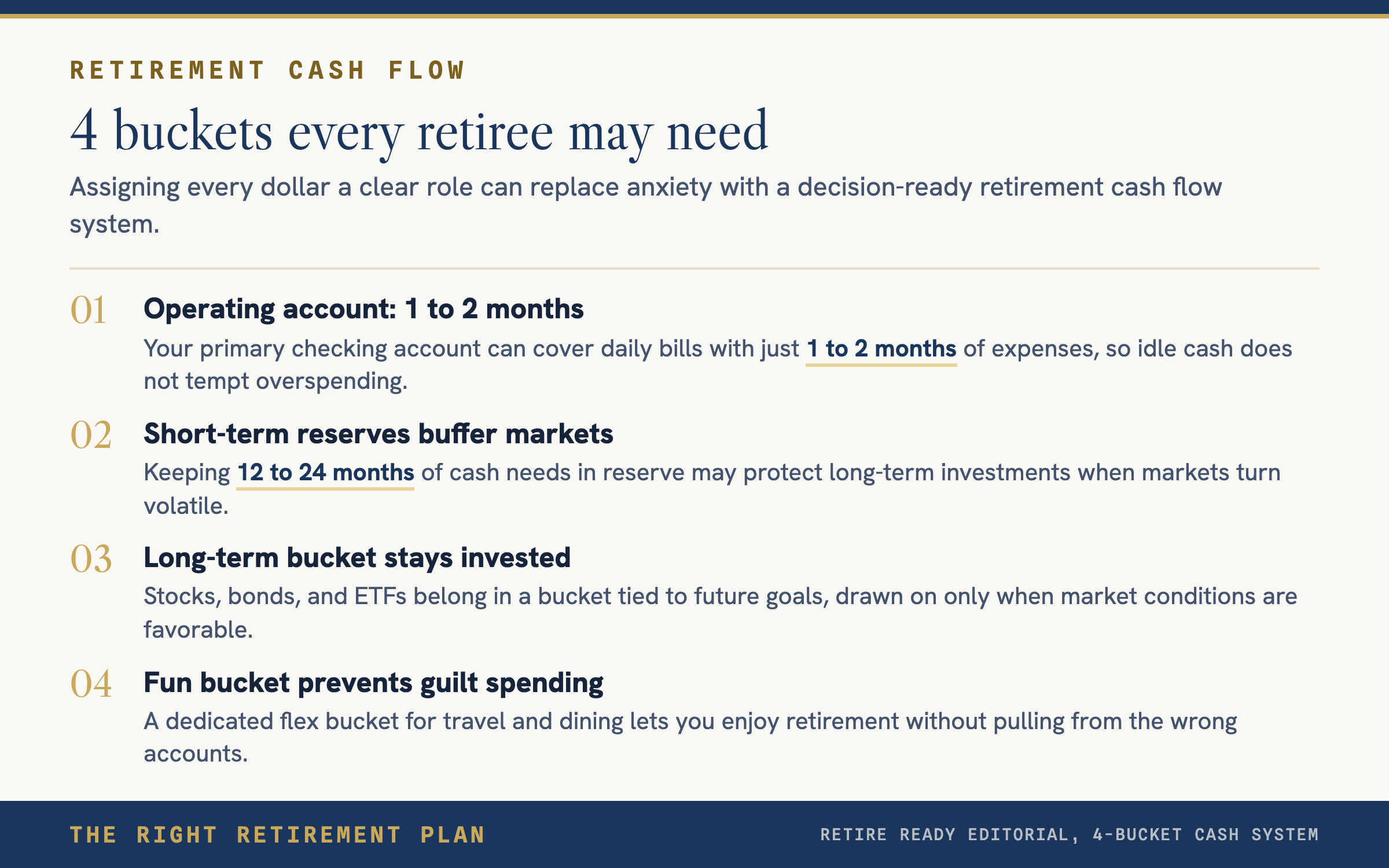
This simple retirement cash flow framework puts every dollar into a clearly defined role.
Bucket 1: Operating Account (1 to 2 months of expenses). This is your primary checking account. Income flows in, regular bills go out. Keep just enough to cover daily life so idle cash does not lose value or tempt overspending.
Bucket 2: Short-Term Reserves (12 to 24 months of cash needs). Park money here for known or likely expenses: travel, home repairs, property taxes, quarterly estimated taxes, tuition, or large gifts. When the roof starts leaking, you do not want to sell stocks in a downturn. This buffer protects your long-term investments when markets turn volatile.
Bucket 3: Long-Term Investments. Stocks, bonds, ETFs, real estate. Whatever matches your plan. This bucket is tied to future goals, not next month's vacation. You only draw from it when market conditions are favorable or your short-term reserves are already doing the heavy lifting.
Bucket 4: Fun and Flex. Yes, fun is a bucket. Use it for travel, dining, upgrades, or that special bottle of wine. If you do not build room for enjoyment into the system, you will pull from the wrong accounts or feel guilty every time you spend. A dedicated fun bucket lets you enjoy retirement without sabotaging your future.
How to Get Started
- Audit your existing accounts and ask what purpose each one serves.
- Set target balances for each of the four buckets.
- Reallocate funds into the appropriate accounts.
- Automate what you can, like refilling the flex account monthly.
The Right Retirement Plan starts with education. If you want to see where your plan stands, take the free Retire Ready Score.