The Identity Shift No One Warns You About
You sold your business. The check cleared. You celebrated. And then a strange silence set in.
Most business owners spend years preparing for the sale itself. They work with brokers, accountants, and attorneys. They clean up the books, negotiate terms, and survive due diligence. But almost no one prepares for what comes after.
The post-sale reality hits harder than most people expect. Not because of money. Because of identity. When you have spent decades leading a team, solving problems, and filling every hour with purpose, selling the business removes all of that overnight. Suddenly there is time but no structure, wealth but no strategy, and options but no clarity.
This experience is completely normal. But that does not make it easy.
Turning Liquidity into Lifestyle
The financial side of a business sale deserves a deliberate plan, not a rush of decisions. Here are strategies that many post-sale retirees find valuable.
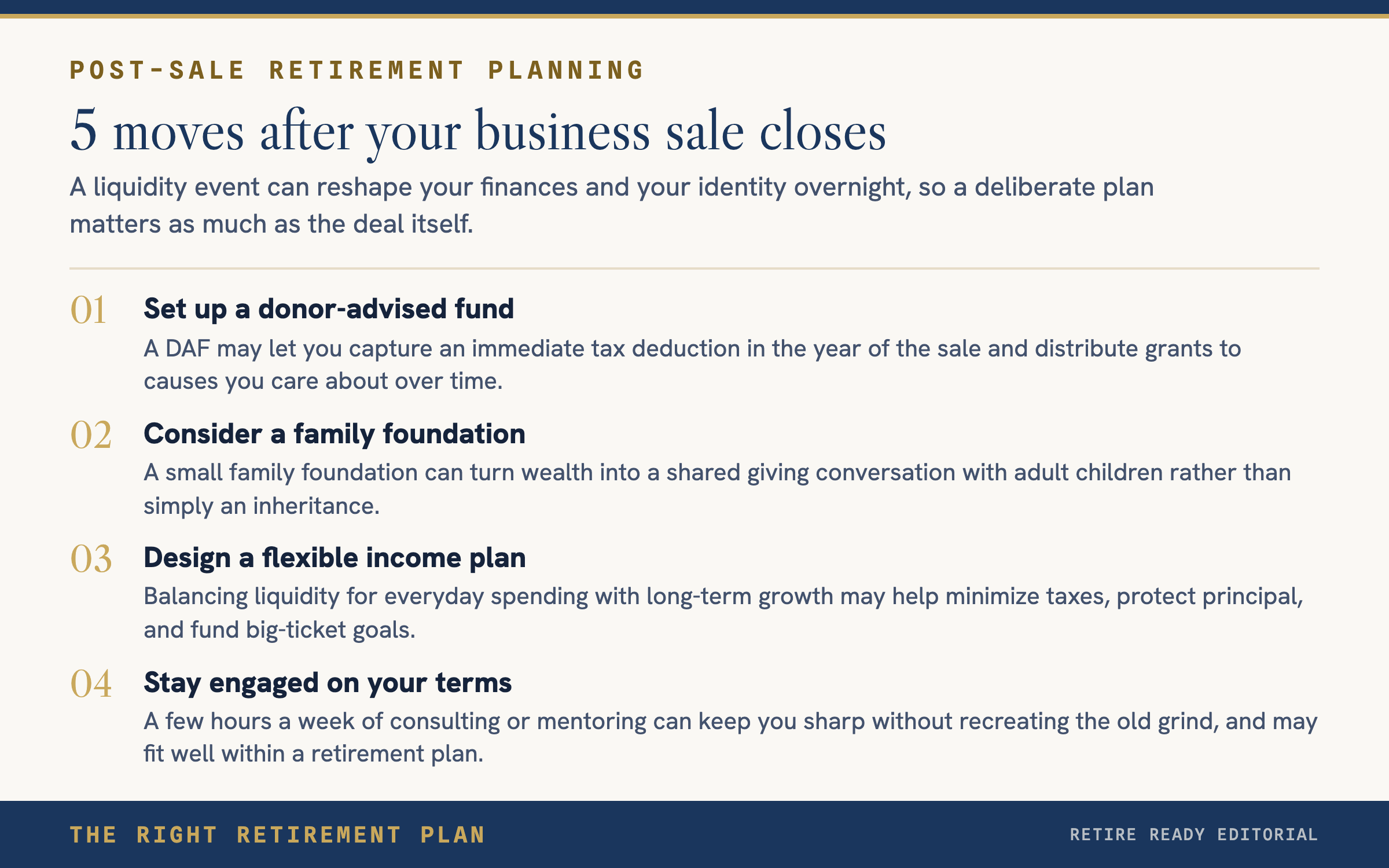
Set up a donor-advised fund. A DAF lets you make a large charitable contribution in the year of the sale, capture an immediate tax deduction, and distribute grants to causes you care about over time. It creates continuity and purpose when the daily grind disappears.
Consider a family foundation. Teaching adult children about generosity and stewardship is easier when there is a shared vehicle for giving decisions. A small family foundation turns wealth into a conversation, not just an inheritance.
Design a flexible income plan. A solid retirement income plan balances liquidity for everyday spending with long-term growth for assets you will not touch for years. The goal is to minimize taxes, protect principal, and still leave room for big-ticket goals like travel or a second home.
Stay engaged on your terms. Many former business owners find that a few hours a week of consulting or mentoring keeps them sharp without recreating the old grind. Professional engagement can be part of the plan, not a contradiction of retirement.
The Post-Sale Checklist
These are the questions worth sitting with after the sale closes.
- How much should stay in cash or low-risk assets?
- How can tax liability be reduced over the next 5, 10, or 20 years?
- What is the best way to support children or grandchildren without creating entitlement?
- What causes deserve support, and what is the most efficient way to give?
- What will fill the hours that the business used to occupy?
The Right Retirement Plan starts with education. If you want to see where your plan stands, take the free Retire Ready Score.