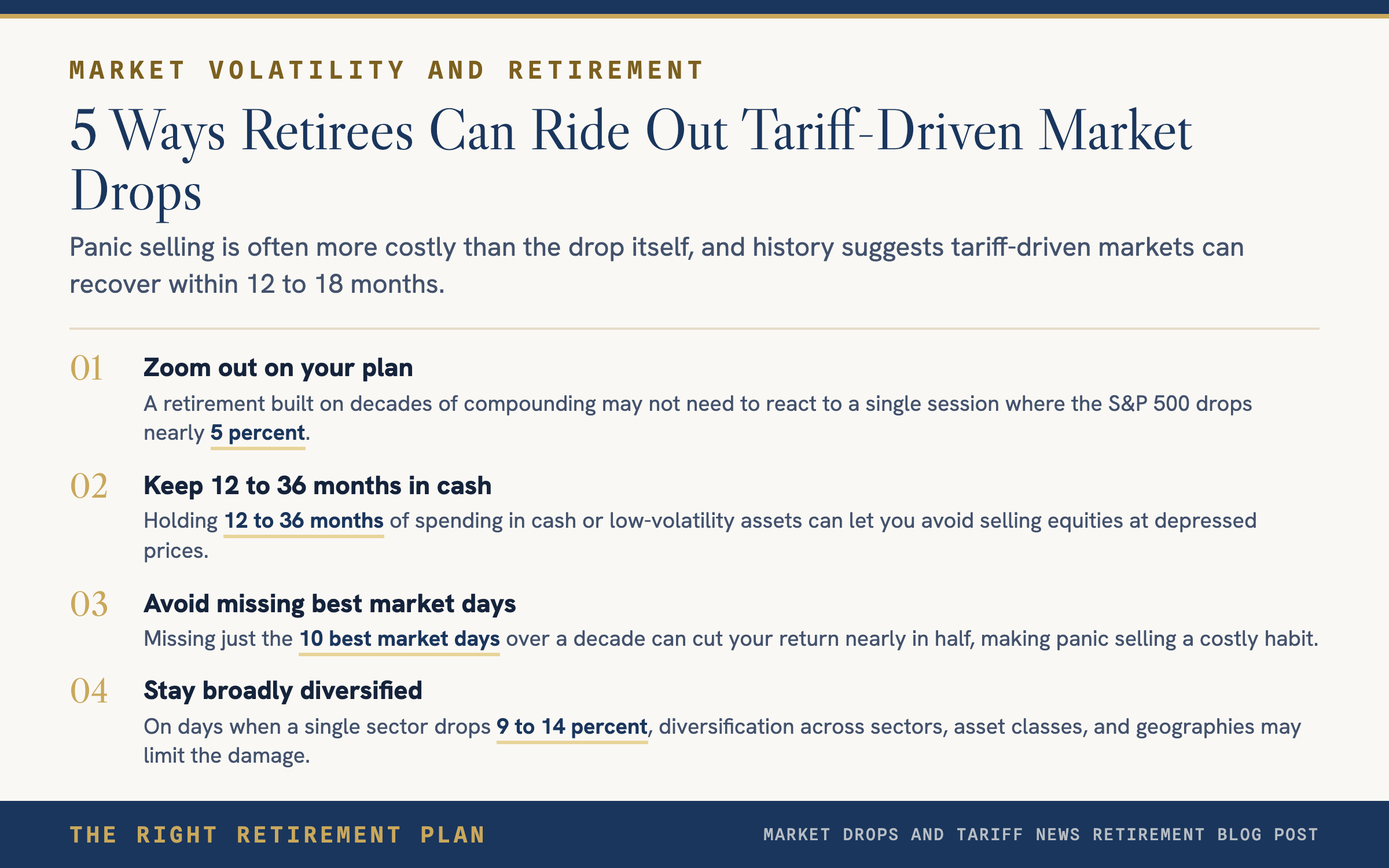
When headlines announce sweeping tariffs and the S&P 500 drops nearly 5 percent in a single session, the instinct to do something feels overwhelming. That instinct is natural. Acting on it, however, is usually the most expensive decision a retiree can make.
Understanding what happened, and what history teaches about similar episodes, can help you respond with clarity instead of fear.
Why Tariff Headlines Hit Markets So Hard
New rounds of tariffs on foreign imports create instant uncertainty. Technology stocks with overseas supply chains, retailers dependent on imported goods, and transportation companies facing higher input costs tend to sell off the hardest. When these sectors fall together, index-level drops look dramatic.
But tariffs do not eliminate demand. They shift costs. Companies restructure sourcing, adjust pricing, or absorb short-term margin compression. Other countries may retaliate, which creates headwinds, yet also sets the stage for eventual negotiation or policy rollback.
History Shows Recovery, Not Ruin
Large single-day drops tied to trade policy are not new.
- In 2018, tariffs on steel and aluminum triggered panic selling. The S&P 500 ended 2019 up over 28 percent.
- In 2020, multiple 1,000 plus point swings occurred during the COVID crash. Markets recovered within months.
- In 2015, a currency devaluation by China caused a 1,000 point drop. Markets climbed back within a year.
What Retirees Can Do Right Now
Zoom out. A retirement plan built on decades of compounding should not be judged by a single trading session.
Check your cash reserves. Households with 12 to 36 months of spending in cash or low-volatility assets can draw from those reserves instead of selling equities at depressed prices.
Rebalance with purpose. Market dislocations can create opportunities to harvest tax losses or shift allocations in a tax-efficient way. A fiduciary advisor can help identify those moves without making emotional changes.
Stay diversified. Broad diversification across sectors, asset classes, and geographies does not always feel exciting. On days when a single sector drops 9 to 14 percent, it proves its value.
The Right Retirement Plan starts with education. If you want to see where your plan stands, take the free Retire Ready Score.