If you are thinking about retirement, or already living it, chances are you have asked yourself some version of this question: "Am I doing this right?"
Recent research from financial planners across the country confirms what many retirees learn the hard way. Avoiding retirement regret takes more than saving enough. It takes a plan that reflects how you actually want to live.
The Four Pillars of a Regret-Free Retirement
Behavioral researchers point to four qualities that separate confident retirees from anxious ones: Alignment, Awareness, Agency, and Adaptability.
- Alignment means your money and your time serve the life you actually want, not someone else's version of retirement.
- Awareness means knowing both the numbers and the emotions behind them. What does your lifestyle really cost?
- Agency is about small, intentional steps. You do not need to leap. You need to move.
- Adaptability is what separates the stressed from the confident. Market swings, health changes, and family dynamics all require a plan that can flex.
Why Phased Retirement Often Wins
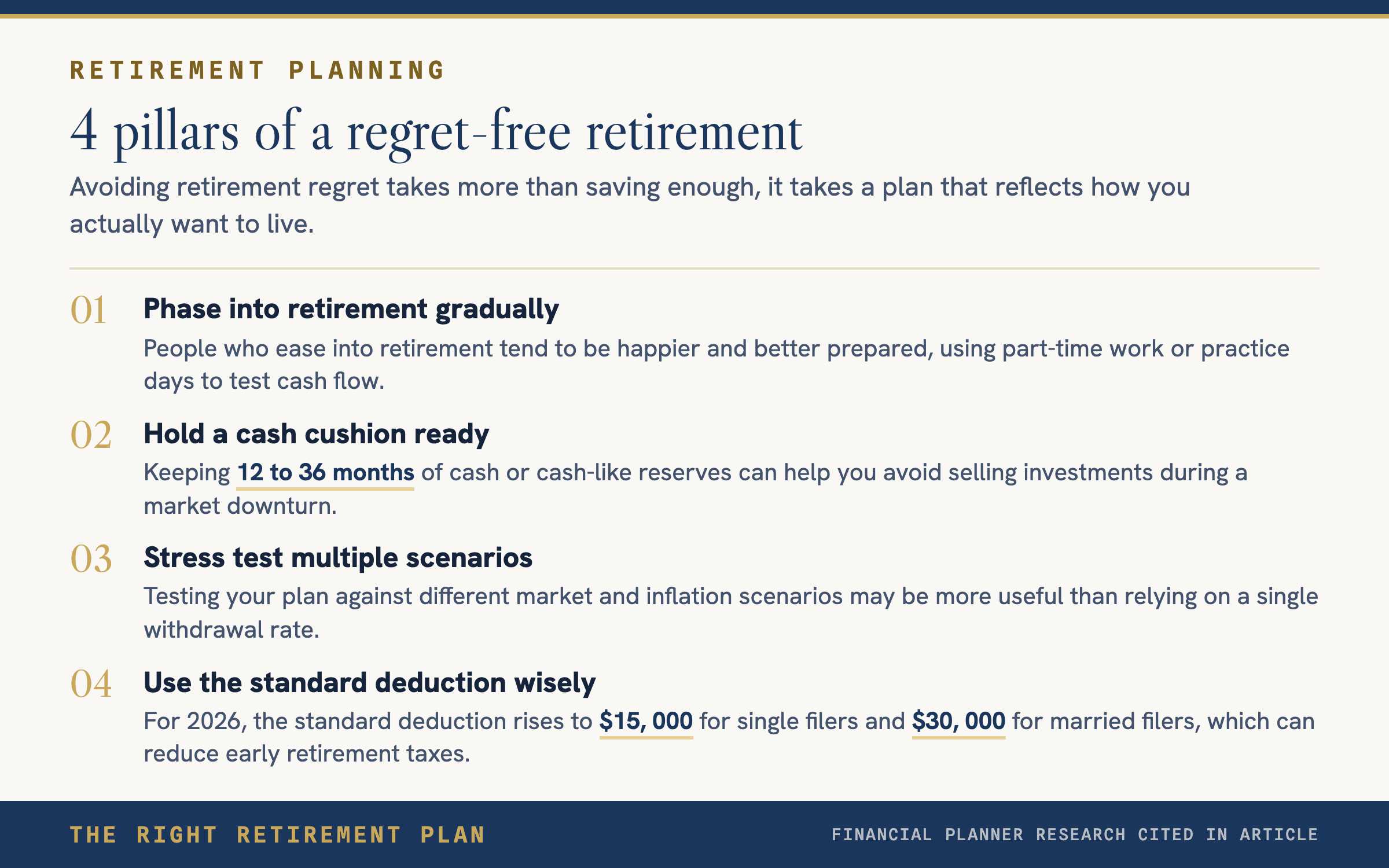
People who ease into retirement tend to be happier and better prepared. A phased approach might include part-time consulting, volunteer work, a small side business, or simply blocking "practice retirement" days into your calendar.
This gives you time to transition your identity, test your cash flow, and figure out what really matters without flipping your life upside down overnight.
Building a Retirement Income Plan That Lasts
Over 60 percent of Americans over 50 worry they will not have enough money to retire. That is not just a math problem. It is a planning problem.
A strong retirement income plan should include several elements.
- Stress testing against different market and inflation scenarios
- Holding 12 to 36 months of cash or cash-like reserves to avoid selling during a downturn
- Dynamic withdrawal strategies rather than blindly following the outdated 4% rule
- Tax-efficient sequencing and Social Security timing optimization
- Built-in flexibility, because life will throw curveballs
A Simple Four Step Framework
1. Clarify. Define what you want retirement to look like and what it will cost.
2. Test. Try it before you fully commit through part-time work, travel, or new routines.
3. Plan. Build a strategy with taxes, income, risk, and flexibility in mind.
4. Refine. Revisit regularly as your life evolves. Retirement is not static.
You do not need to be perfect. You just need a plan that reflects you.
The Right Retirement Plan starts with education. If you want to see where your plan stands, take the free Retire Ready Score.