It might seem odd to find a wellness article on a retirement education site. But here is the truth: if you do not feel good, think clearly, or have energy, your money loses much of its value. You will not enjoy it, manage it well, or make good decisions with it.
Retirement planning that actually works is about building wealth you can use. Wealth that supports a life well lived. And that starts with your health.
Why Health Belongs in the Retirement Conversation
Financial educators and fiduciary advisors across the country are noticing the same pattern. The retirees who feel their best also tend to think their best. The ones who are energized and mentally sharp make better long-term financial decisions. And the ones who take care of their bodies often take better care of their finances, too.
That is why retirement wellness deserves as much attention as asset allocation. Investing in quality food, good sleep, daily movement, and real sunlight pays dividends that no brokerage account can match.
Small Habits Compound, Just Like Money
You have probably heard the phrase "time in the market beats timing the market." The same principle applies to your body. Small habits, repeated consistently, lead to remarkable outcomes.
- Better sleep leads to better judgment during volatile markets.
- Better food fuels the clarity needed to solve problems and stay focused.
- Regular movement reduces burnout and sharpens concentration.
- Morning sunlight strengthens your circadian rhythm and supports immune function.
None of this requires expensive equipment or extreme discipline. It just requires consistency.
The Retirement Risk Nobody Talks About
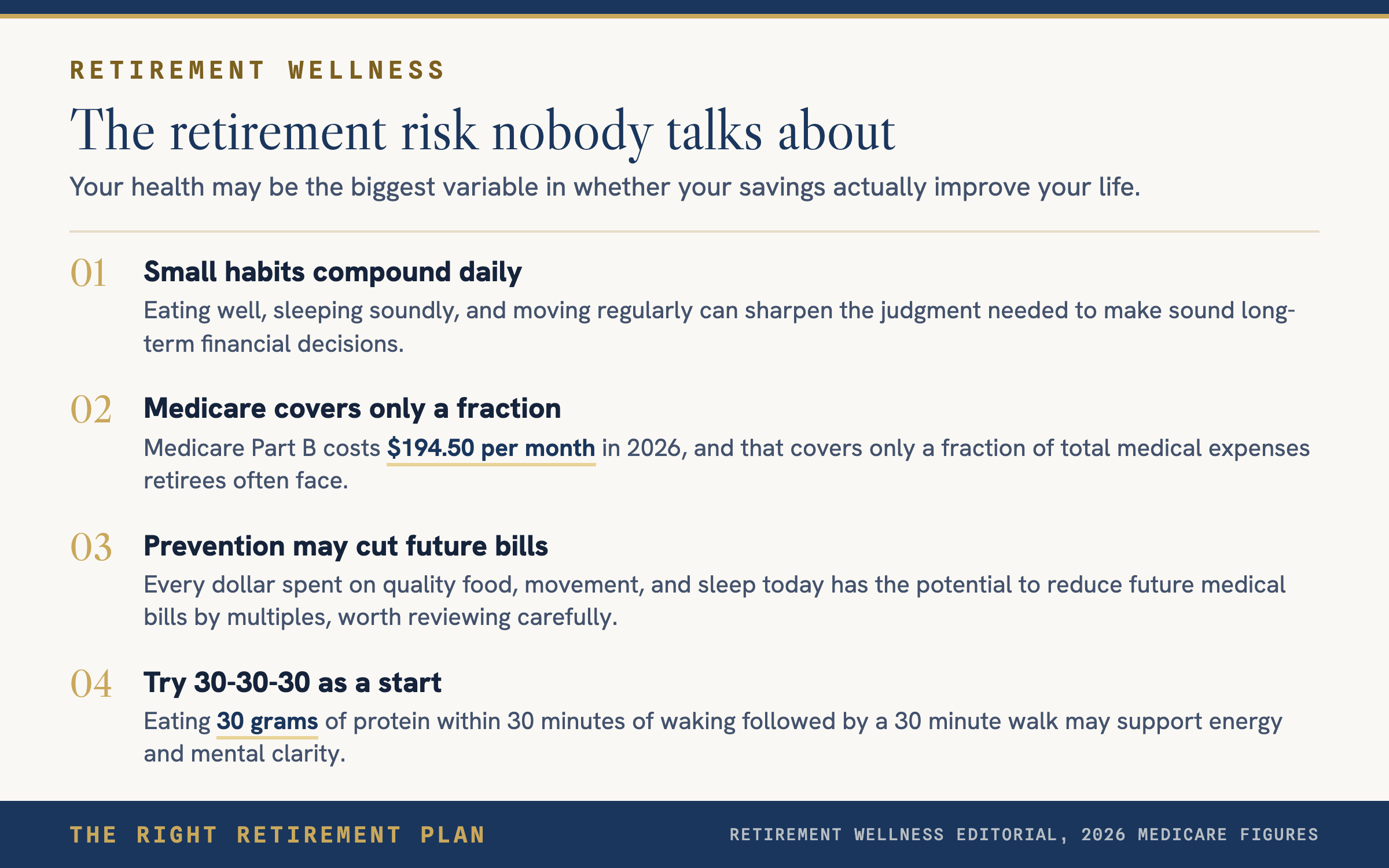
Most retirement plans address market risk, inflation risk, and longevity risk. Very few address the risk of losing your health too early to enjoy what you have saved.
Consider this: a $2 million portfolio means very little if chronic illness, low energy, or cognitive decline prevents you from living on your own terms. Meanwhile, healthcare costs remain one of the largest expenses in retirement. Medicare Part B alone costs $194.50 per month in 2026, and that covers only a fraction of total medical expenses. Prevention is not just good medicine. It is good financial planning.
The Right Retirement Plan starts with education. If you want to see where your plan stands, take the free Retire Ready Score.