Millions of Americans have at least one old 401(k) sitting at a former employer. It is easy to forget about. Life moves on, new jobs bring new plans, and that old account quietly slips off the radar. But "out of sight, out of mind" can be one of the most expensive habits in retirement planning.
The real cost of a forgotten 401(k) is not just the account balance itself. It is the years of missed growth, unnecessary fees, and misaligned investments that pile up while no one is paying attention.
Why Old 401(k) Accounts Underperform
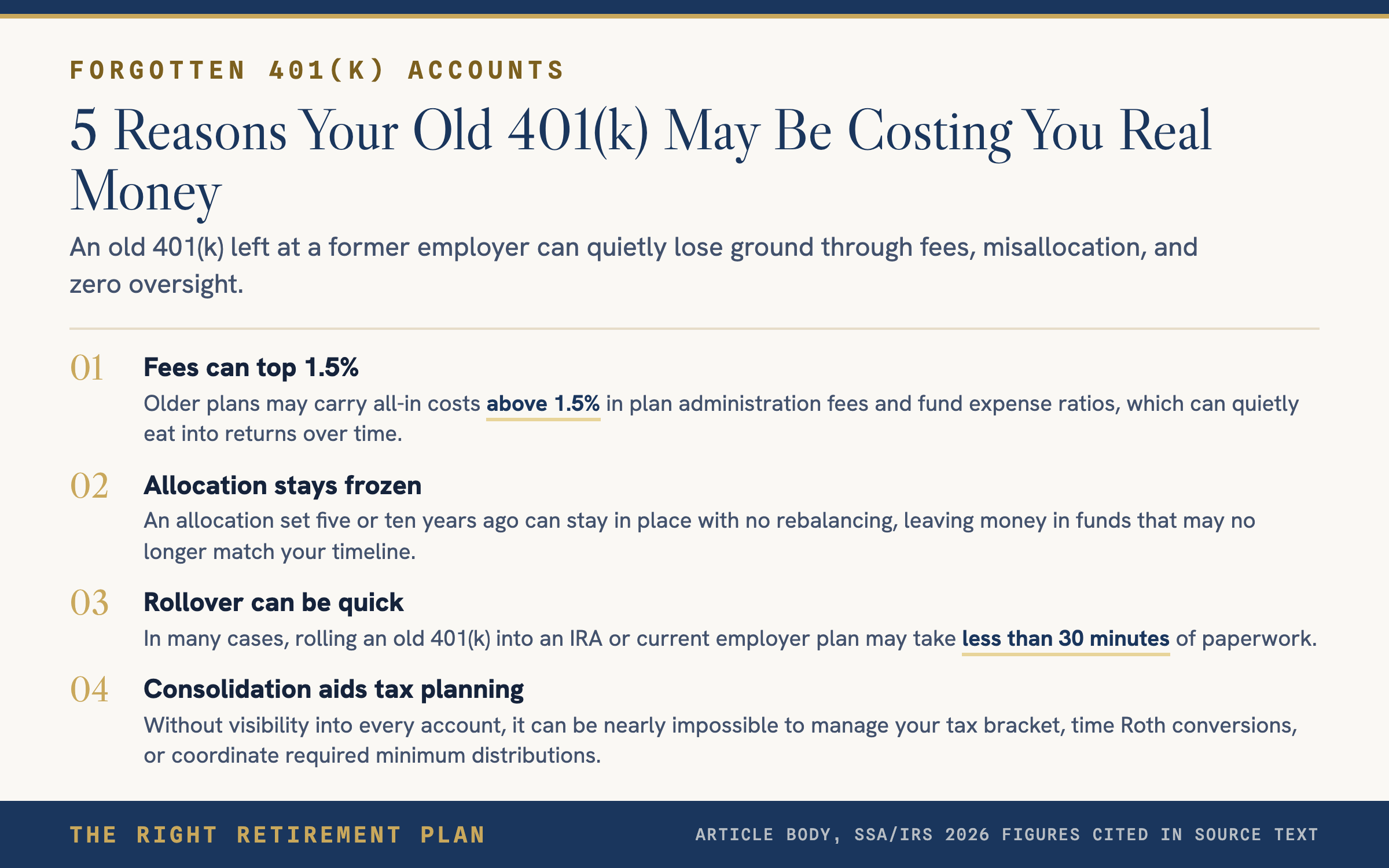
When someone leaves an employer, their 401(k) does not automatically adjust to their new financial picture. The allocation set five or ten years ago stays frozen in place. Many forgotten accounts end up parked in money market funds, overly conservative bond holdings, or outdated target-date funds that no longer match the owner's timeline.
Beyond allocation, most 401(k) plans offer a narrow menu of mutual funds. There are no ETFs, no custom portfolio options, and limited ability to optimize for taxes. Meanwhile, plan administration fees and fund expense ratios can quietly eat into returns. It is not unusual to find all-in costs above 1.5% in older plans.
Perhaps the biggest issue is that nobody is watching. There is no rebalancing, no coordination with other accounts, and no tax planning. The account is just floating.
What a Rollover Can Do
Rolling an old 401(k) into an IRA or a current employer plan is one of the simplest moves in retirement planning. In many cases, the paperwork takes less than 30 minutes.
Once consolidated, the money can be:
- Invested across a broader, lower-cost lineup of funds
- Coordinated with Social Security timing and withdrawal sequencing
- Managed alongside Roth conversion strategies and required minimum distributions
- Monitored and rebalanced on an ongoing basis
What to Do Next
If you suspect an old 401(k) is sitting somewhere, start by contacting your former employer's HR department or the plan administrator listed on old statements. The National Registry of Unclaimed Retirement Benefits is another free resource. Once you locate the account, compare the investment options and fees against what is available in an IRA or your current plan.
A fiduciary advisor can help evaluate whether a rollover makes sense for your situation, especially when tax implications or employer stock are involved.
The Right Retirement Plan starts with education. If you want to see where your plan stands, take the free Retire Ready Score.