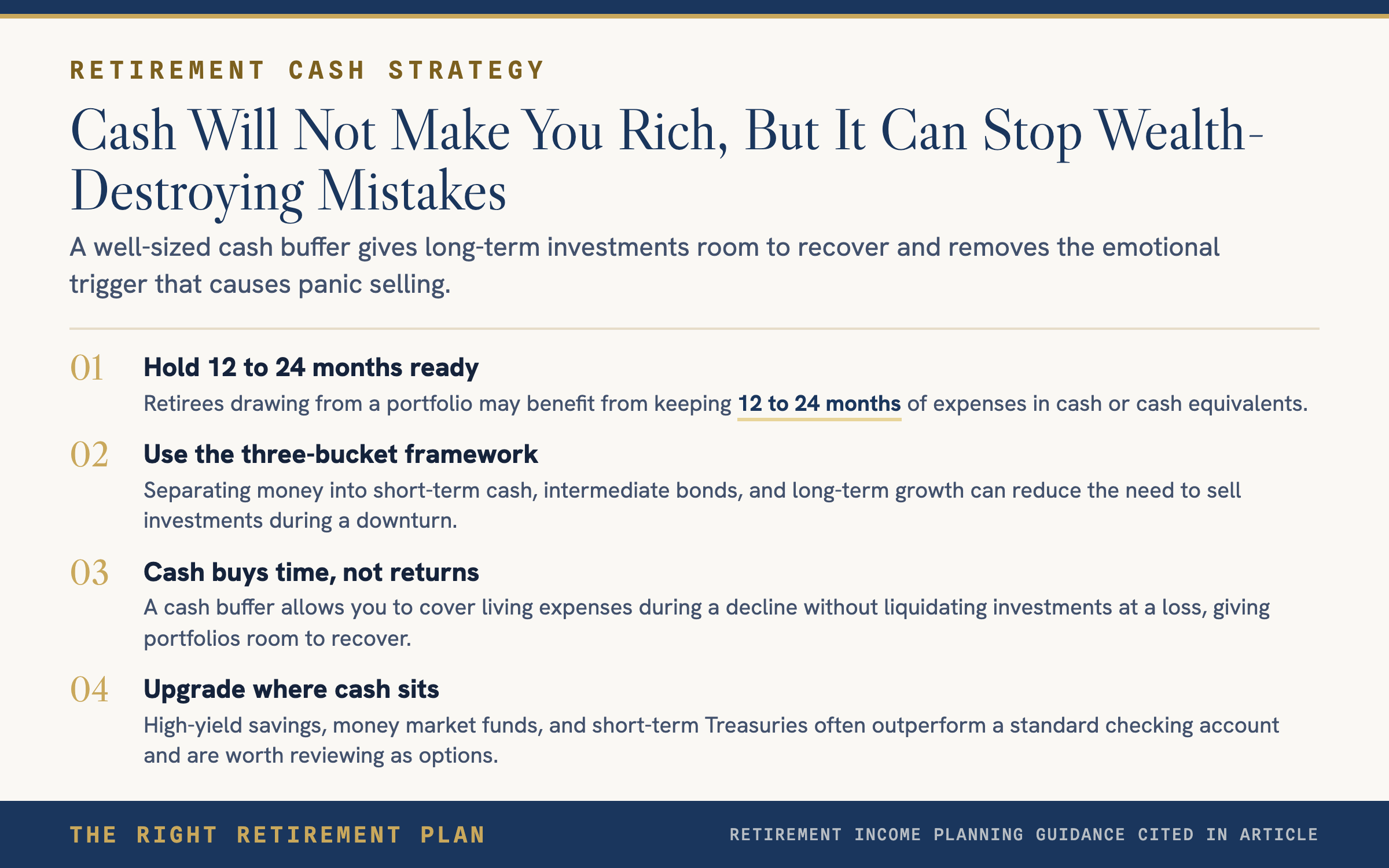
There are two extremes when it comes to cash. Some people call it trash and invest every dollar. Others keep everything liquid because it feels safer. Both approaches carry real risk. Cash will not build long-term wealth, but when used strategically, it can be one of the most powerful tools in a retirement income plan. It will not make you rich, but it can stop you from making wealth-destroying mistakes.
Why a Cash Buffer Matters in Retirement
Cash does not yield 8 percent. It does not have exciting ticker symbols. But it does something far more important in certain moments. It buys you time.
A well-sized cash buffer allows retirees to cover living expenses during a downturn without liquidating investments at a loss. It removes the pressure to panic sell. It also helps people sleep better when headlines turn scary.
Many financial planners recommend that retirees hold 12 to 24 months of expenses in cash or cash equivalents. The goal is not fear of the market. The goal is giving long-term investments room to recover after a decline.
Consider someone who retired in late 2019. When markets crashed over 30 percent in early 2020, a retiree with two years of cash set aside never had to sell a single stock to fund daily life. By 2021, the portfolio had recovered. No losses locked in. No stress-induced mistakes. Just a plan that worked.
The Bucket Strategy for Retirement Income
A popular framework breaks retirement savings into three time-based buckets.
Bucket 1: Short-term cash (0 to 2 years). This covers daily bills, travel, healthcare, and other near-term needs. Think high-yield savings accounts, money market funds, short-term Treasury bills, and CDs. The goal is stability, not growth.
Bucket 2: Intermediate assets (3 to 10 years). Bonds, balanced funds, and dividend-paying stocks live here. This bucket provides moderate growth and income as a bridge between safety and returns.
Bucket 3: Long-term growth (10 plus years). Stocks and other growth-oriented investments belong in this bucket. Volatility is expected and acceptable because these funds have a decade or more to ride out market cycles.
General guidelines vary by situation. People still working with stable income may need only 3 to 6 months of expenses in cash. Retirees drawing from a portfolio often benefit from 12 to 24 months. Someone who recently sold a business may hold up to 36 months while planning next steps.
What Cash Cannot Do
Cash will not outpace inflation. It will not compound meaningfully over time. If an entire portfolio sits in cash for years, purchasing power quietly erodes. Think of cash as a bodyguard, not a business partner. It protects, but it does not build.
The best places to park cash include high-yield savings accounts, money market funds inside a brokerage, short-term Treasury ETFs, and CD ladders. Avoid letting large sums sit in checking accounts earning nothing, and resist chasing yield with unnecessary risk.
The Right Retirement Plan starts with education. If you want to see where your plan stands, take the free Retire Ready Score.