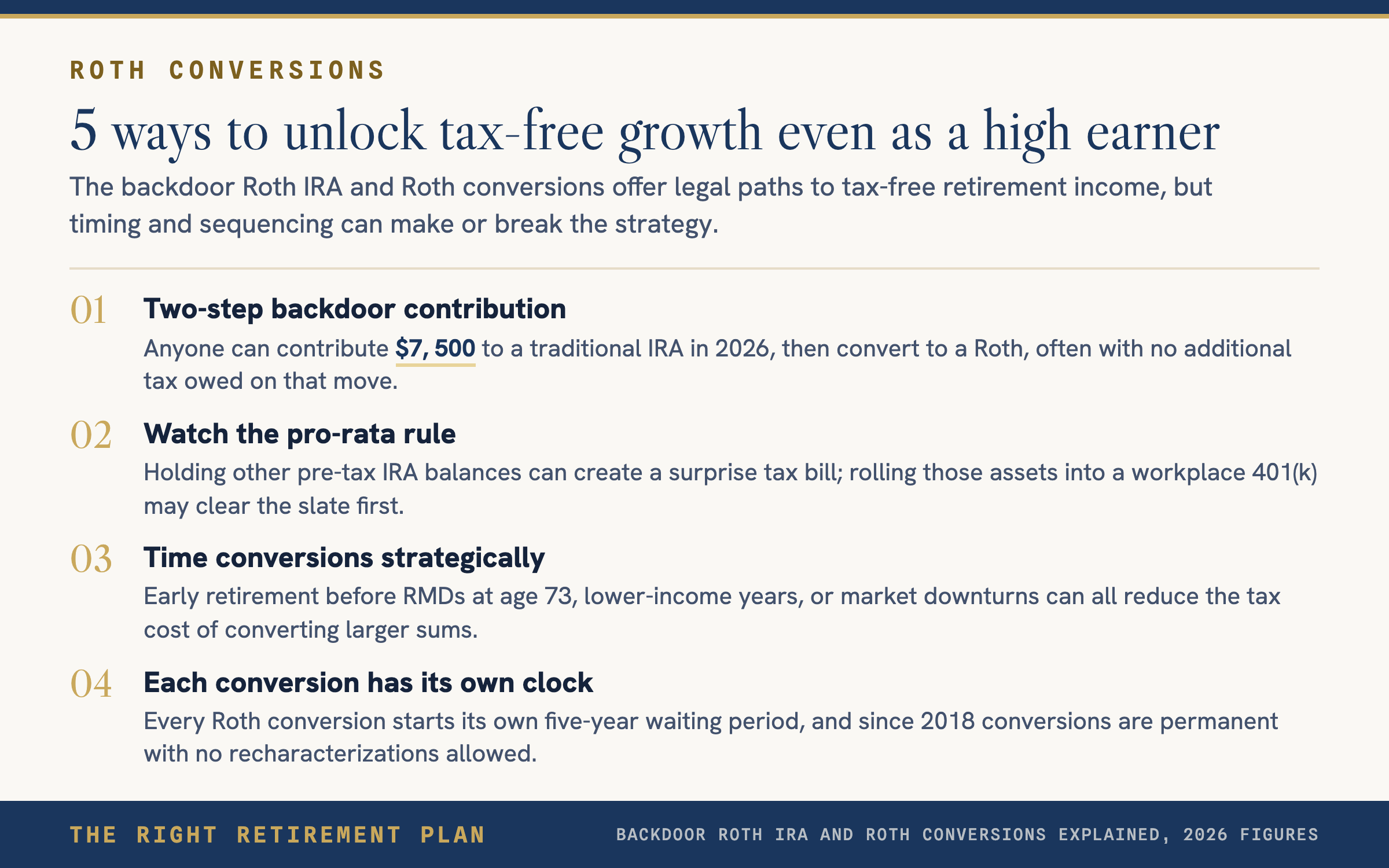
For high earners, one of the biggest frustrations in retirement planning is hitting the Roth IRA income limits. You make good money, but the IRS says you earn too much to contribute directly to one of the best retirement accounts available.
That is where strategy comes in. Two approaches, the backdoor Roth IRA and Roth conversions, offer legal paths to unlock the full power of tax-free growth. Done correctly, these moves can add significant tax-free income to a retirement plan over time.
Why Roth Accounts Matter So Much
Once money is inside a Roth, all dividends, gains, and growth accumulate without future tax drag. Qualified withdrawals in retirement come out completely tax-free. There are also estate planning benefits: no required minimum distributions for the original account owner, and tax-free distributions for heirs even under the 10-year rule.
If you are in your peak earning years, these benefits become even more valuable. Pay taxes once at today's known rates, and never again on that money.
The Backdoor Roth IRA: A Legal Workaround
High earners cannot contribute directly to a Roth IRA, but the backdoor strategy creates a two-step path.
- Contribute to a Traditional IRA. Anyone can put in $7,500 annually in 2026. This contribution is non-deductible if you are above income limits.
- Convert to a Roth IRA. Move those dollars into a Roth, usually right away. Because you already paid taxes on the contribution, there is typically no additional tax owed.
Roth Conversions: Bigger Moves, Bigger Impact
While the backdoor Roth IRA focuses on annual contributions, Roth conversions let you move much larger sums from Traditional IRAs, 401(k)s, 403(b)s, or TSPs. You will pay ordinary income tax on the amount converted, but from that point forward all growth is tax-free.
The real advantage is timing. You choose when to pay the tax bill. This makes conversions especially powerful in certain windows.
- During early retirement, before RMDs kick in at age 73
- In years with temporarily lower income
- During market downturns, when you can convert more shares at lower values
Always pay the conversion tax bill with non-retirement funds. Otherwise, you lose much of the compounding benefit.
The Right Retirement Plan starts with education. If you want to see where your plan stands, take the free Retire Ready Score.