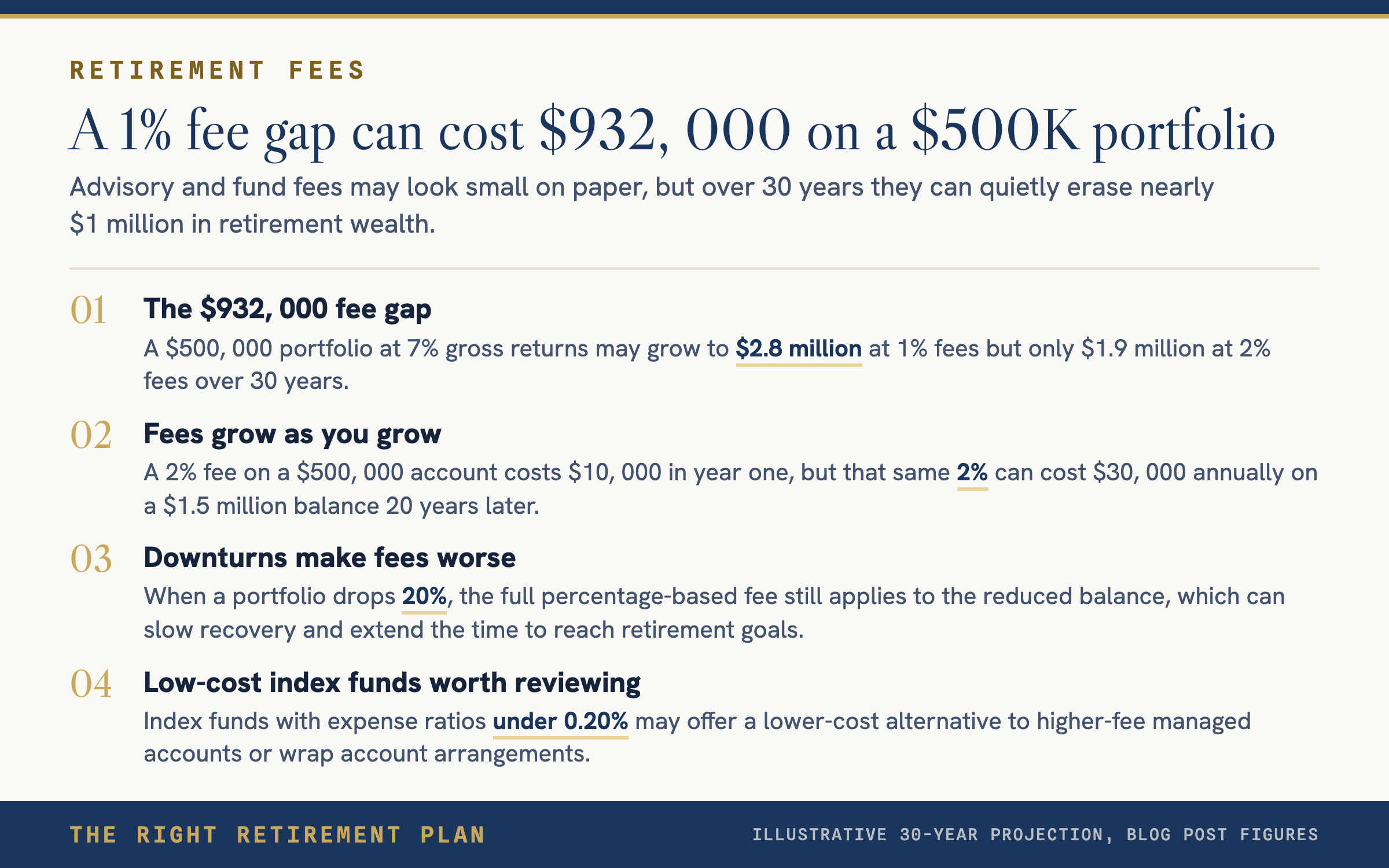
Most pre-retirees focus on picking the right stocks or timing the market, but advisory fees represent one of the biggest threats to long-term wealth accumulation. A seemingly small 1% difference in annual fees can devastate your retirement nest egg through the power of reverse compounding.
The Million-Dollar Math Behind Advisory Fees
Consider a $500,000 portfolio with 7% gross annual returns over 30 years. Here's where investment fees create massive divergence:
- 1% annual fee: Portfolio grows to $2.8 million
- 2% annual fee: Portfolio grows to only $1.9 million
- Difference: $932,000 in lost wealth
This math applies whether you're paying mutual fund expense ratios, advisory management fees, or wrap account charges. The fee structure matters less than the total annual cost.
Why Small Percentages Create Big Problems
Fee compounding works against you in two devastating ways:
- Direct cost: You pay more each year in absolute dollars as your account grows
- Opportunity cost: Money paid in fees can't compound and grow over time
Many investors underestimate this impact because they think in annual terms rather than cumulative wealth destruction over retirement timeframes.
Finding Fee-Conscious Solutions
Lower-cost alternatives include:
- Index funds with expense ratios under 0.20%
- Fee-only financial advisors charging flat rates
- Target-date funds from reputable providers
- Self-directed investing with educational support
Take the next step: If you want personalized guidance on optimizing your retirement plan while minimizing unnecessary costs, consider taking our free Retire Ready Score assessment.