The Hidden Cost of Monthly Subscriptions
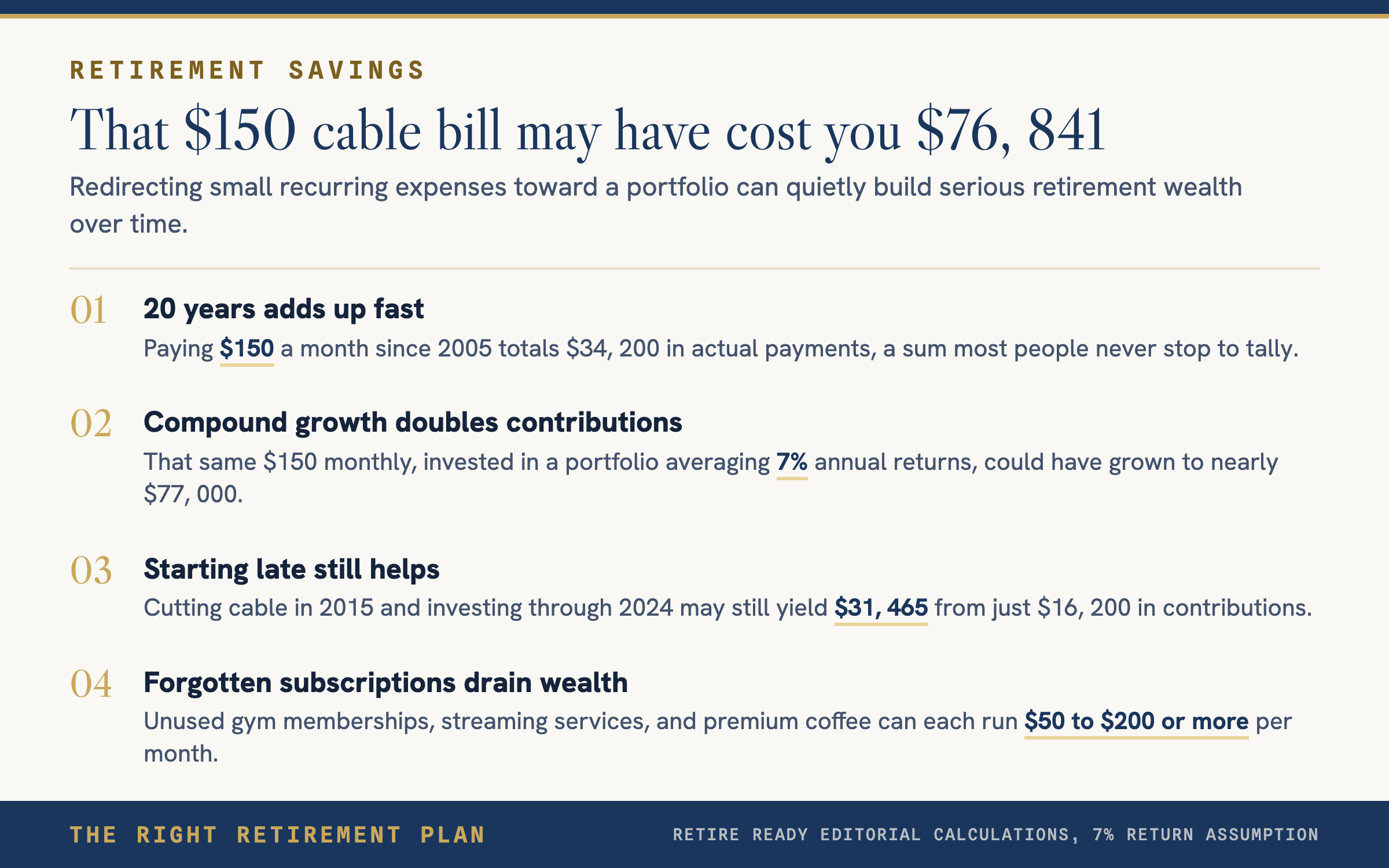
That $150 monthly cable bill you've been paying since 2005? If you had invested that money in a diversified portfolio instead, it could be worth $76,841 today. This eye-opening calculation shows how seemingly small recurring expenses can quietly sabotage your retirement planning efforts.
The math is straightforward but powerful. Over 19 years, $150 per month totals $34,200 in actual payments. But invested in a portfolio averaging 7% annual returns, that same money would have grown to nearly $77,000, more than doubling your initial contributions.
Even if you missed the early years, the growth potential remains significant. Maryland retirees who cut cable in 2015 and invested those savings through 2024 would still have accumulated $31,465 from just $16,200 in contributions.
Why Small Changes Create Big Results
Compound growth transforms modest monthly investments into substantial retirement assets. The key factors driving this transformation include:
- Time horizon: Earlier start dates maximize compound growth
- Consistent contributions: Regular monthly investing builds momentum
- Market returns: Diversified portfolios historically average 7-10% annually
- Avoiding lifestyle inflation: Redirecting expenses instead of increasing spending
Beyond Cable: Other Hidden Wealth Drains
This principle extends far beyond cable bills. Consider these common retirement savings killers:
- Unused gym memberships ($50-100/month)
- Premium coffee habits ($150/month)
- Subscription services you've forgotten about ($200+/month)
- Dining out frequency that crept up over time
Advisors in the Annapolis area often see clients who wish they'd made these connections sooner, but the encouraging news is that it's never too late to start redirecting expenses toward your future.
The good news: small course corrections today can still create meaningful impact on your retirement outcome.
If you want to see how this principle applies to your specific situation, take our free Retire Ready Score, a quick assessment that evaluates your current plan across income, taxes, healthcare, and protection.